Get Full Government Meeting Transcripts, Videos, & Alerts Forever!
Get email alerts on the Multilingual Learning topic
No spam. Unsubscribe anytime.
District presents multilingual learners evaluation citing growth, staffing and data gaps
Summary
Rebecca Soriano presented an evaluation showing multilingual learners in the district come from 29 birth countries and speak 35 languages; the report highlighted gains in math areas, gaps in biology and English II proficiency, staffing additions, data-system limits and program strategies such as sentence frames and sheltered classes.
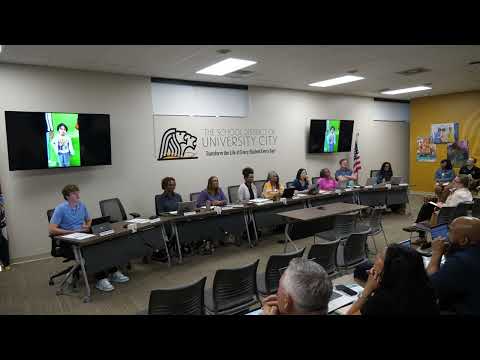
Rebecca Soriano, the district''s multilingual program specialist, told the Board of Education the district''s multilingual learners come from 29 birth countries and speak 35 languages, and that enrollment of multilingual learners rose sharply heading into the 2024''5 school year.
"So tonight, your content objective is that your board members and community members will understand how multilingual learners are performing and growing and will be able to identify strengths, needs, and areas for program improvement," Soriano said, explaining the presentation''s purpose.
The evaluation reported that multilingual students contributed to recent increases in the district''s mathematics scores and that students met EOC targets in algebra and government but did not meet them in biology or English II. Soriano described the ACCESS assessment as a four-domain measure (reading, writing, listening and speaking) used to track English proficiency and to inform individualized learning plans.
Soriano outlined district strategies to support multilingual learners: adding staff (including ML social workers and ML aides who speak languages such as Japanese and Spanish), offering sheltered social studies classes, embedding language objectives alongside content objectives in lesson plans, and using sentence frames to lower expressive-language pressure and increase student writing practice.
She also flagged data-system limitations, saying some systems "don't speak to each other," which can produce small inconsistencies in counts and complicate tracking. The presentation noted family engagement work, use of Panorama surveys to gather family feedback, and upcoming ML-specific family events under a staff leader''s direction.
Board members praised the team for the progress and the supports described but acknowledged proficiency gaps remain in some subjects. One board member said the presentation "gives me so much hope" while noting the district must continue work where state standards were not met.
The presentation closed with a recommendation to sustain learning-core commitments, continue clustering and sheltered classes where feasible, expand ML staff when possible, and improve data systems to better align program tracking and instructional planning. The board did not take formal action during the presentation; members asked clarifying questions and expressed general support.