Get Full Government Meeting Transcripts, Videos, & Alerts Forever!
Get email alerts on the Labor Negotiations topic
No spam. Unsubscribe anytime.
Public commenters urge National City to negotiate quickly and fairly as MEA contract nears expiration
Summary
More than a dozen speakers at a National City special meeting urged the council to complete fair, timely labor negotiations before the MEA contract lapses; commenters also criticized outside counsel spending and asked for higher pay and benefits for part‑time and frontline city workers.
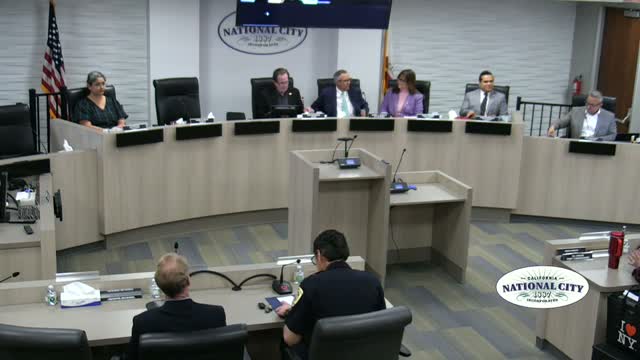
National City held a special City Council meeting to hear public comment on labor negotiations, and speakers urged the council to reach a fair contract before the current Municipal Employees Association agreement lapses.
Frank Rivera, a retired SEIU Local 221 member, told the council it should "negotiate fairly and efficiently" because the MEA contract ends in about three months and the council should aim to have a new memorandum of understanding ready for ratification by the June 17, 2025, meeting. Rivera said the contract extension covered a roughly three‑and‑a‑half year period beginning January 2021 and emphasized that "employees are your most valuable resource."
Several commenters tied pay concerns to recent city spending. Mikaela Polanco said the city faces a roughly "3.4, 3.5" million deficit and argued that money spent on what she described as the "Onion Project" and on outside counsel defending a public‑records lawsuit could instead have gone to wages, pensions and retirement benefits. "This could have been prevented," Polanco said, urging accountability for city management.
Library worker and SEIU member Marikar Kamaya urged the council to address low pay for part‑time staff and asked for bilingual pay, educational benefits and options for health care for part‑time employees: "Our part time staff have been carrying on that extra labor for years without additional compensation," Kamaya said.
Joel Morrison, an IBEW Local 569 member, argued that paying living wages improves retention and productivity, saying higher pay can reduce turnover costs and ultimately save the city money. Lisa McCarthy and other commenters similarly warned that the city risks losing trained employees if salaries remain noncompetitive.
A number of speakers also criticized the city’s use of outside legal counsel and delays in producing public records. Raina Forten and others said months and funds were spent on outside counsel in a public‑records matter and asked how those expenditures reduce resources available for employees. Former labor lawyer Mike Aguirre framed the issue as one of "opportunity cost," urging officials to prioritize spending that supports frontline workers in a city he described as having a large Latino workforce.
After public comment, the council convened a closed session to meet with labor negotiators. The city attorney said the closed‑session conference involved the Municipal Employees Association, National City Firefighters Association, Police Officers Association and unrepresented groups. The council called the closed session and later returned briefly to say it would report out at the end of the council meeting; no formal votes or ratifications were announced during the special meeting.
The council adjourned the special meeting to switch systems for the next agenda and said it would make any report from closed session when the full council meeting resumed.