Get Full Government Meeting Transcripts, Videos, & Alerts Forever!
Get email alerts on the Public Art topic
No spam. Unsubscribe anytime.
Carlsbad Village Association presents final 'Spring Kaleidoscope' report, cites business benefits and outreach
Summary
Christine Davis of the Carlsbad Village Association told the Arts Commission that the four-year pop-up public-art program concluded with the Spring Kaleidoscope activation (March 23'April 21), involving 10 artists, about 15 businesses and tens of thousands of online impressions; commissioners discussed student participation and funding.
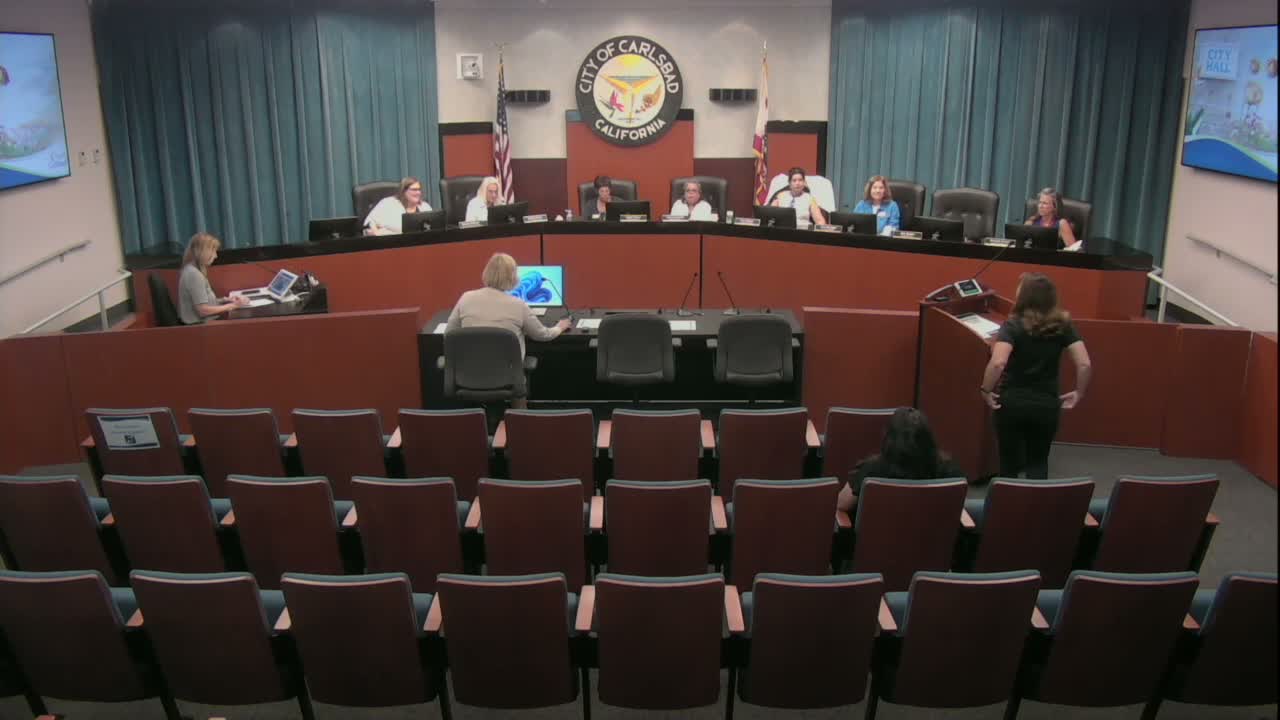
Christine Davis, representing the Carlsbad Village Association, told the Carlsbad Arts Commission on Aug. 1 that the association's four-year temporary public-art program ended its latest activation, "Spring Kaleidoscope," which ran March 23 to April 21 and enlivened downtown storefront windows.
Davis said the program began as a COVID-era response and grew into a multi-format effort that included window paintings, glass art, surfboard art and large chalk displays. She told commissioners the Spring Kaleidoscope call attracted 18 applications; organizers selected 10 artists who worked with about 15 participating businesses to enhance roughly 20 windows. Davis said online promotion and coverage generated substantial visibility, reporting "over 65,000 impressions" on main social feeds and additional blog and website traffic.
The presentation included testimony from participating artists about inspiration and technique, and Davis read business feedback from proprietors such as Jolene Marquez of Village Florist Company and the owner of Jaden Presley Salon, both of whom said the window art sparked passerby interest and created customer conversation. Davis said, and staff confirmed, the city's cultural-arts office contracted and funded the temporary art through its public-art budget and that artists were paid a living wage under the contract; the administering association received a modest administrative fee.
Commissioners praised the installations and asked whether businesses paid for participation (they did not) and whether the program could include students. Commissioner Michelle Bridal urged outreach to local high schools, and Davis said a student-focused call could work but would require attention to timing, mentorship and legal/payment logistics: "we'd have to pay the parent," she said, noting constraints around paying minors.
Davis also listed operational lessons learned: clarify application scope and timelines for artists, provide a liaison to connect busy small-business owners and artists, plan for weather contingencies (artists sometimes had to repaint after rain), guard against accidental removal or damage by public-works activities, and recommend removable, weather-resistant materials for future activations.
Commissioners and staff discussed whether funding remains available. Suzanne Smithson, staff liaison, said public-art funds exist and that the new cultural-arts manager would review priorities and balances. Several commissioners suggested working with local high schools, including Sage Creek, to expand student involvement if logistical and legal hurdles can be resolved.
The commission did not take a formal vote on continuing the program at this meeting; Davis concluded by thanking the commissioners and noting that a short compilation video and online materials documented the artists and locations.