Get Full Government Meeting Transcripts, Videos, & Alerts Forever!
Get email alerts on the School Closure topic
No spam. Unsubscribe anytime.
Facilities panel recommends closing three Lynwood Unified elementary schools; parents and teachers urge delay
Summary
A facilities optimization consultant recommended closing Wilson, Lugo and Rosa Parks elementary schools at the end of the school year because of long-term enrollment decline. Dozens of parents, teachers and students pleaded with the Lynwood Unified School District board to slow the process, demand more data and consider impacts on special-education services and community programs.
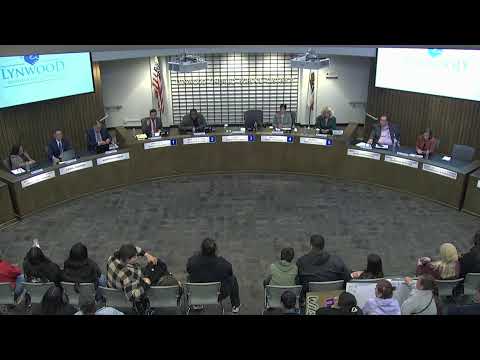
At its Nov. 13, 2025 regular meeting, the Lynwood Unified School District board heard a formal presentation from Dr. Joseph Pandolfo of Total School Solutions on recommendations from the district’s facilities optimization committee, including moving Hosler Middle School into the new Lynwood High campus and closing three elementary schools — Wilson, Lugo and Rosa Parks — at the end of the current school year.
Pandolfo summarized the committee’s review of multiple metrics, including historic and projected enrollment, facility condition, capacity maps and a 400‑respondent district survey. “This is intended as a summary ... it’s a 35,000‑foot overview,” Pandolfo said as he walked trustees through maps showing excess capacity and projected declines that the committee said make consolidation a practical option.
The recommendation drew immediate and sustained pushback during the meeting’s public-comment and public-hearing periods. Parents, teachers, grandparents and students filled the chamber to plead with trustees to preserve neighborhood schools, to slow the timeline and to supply additional data. “Our school is more than a place where students come to learn. It is a true community,” parent Sulma Chavez told the board, urging trustees to reconsider closing Rosa Parks.
Teachers and staff pointed to programmatic strengths at the schools under consideration: Rosa Parks, for example, received strong technology-readiness ratings in the facilities master plan and an elementary teacher who reviewed the plan said the campus overall had been rated between fair and good in the district’s documents. “Rosa Parks is also special,” said a teacher who said she had worked in the district for years and followed the committee’s work on YouTube.
Trustees pressed Pandolfo for details. Trustee Dr. Hardy asked whether the dataset was complete and raised concerns about the timing of a closure at the end of the year, noting the operational complexity of moving students and programs. Trustee Morales described the scale of the fiscal challenge: he said the district once enrolled as many as 18,000–19,000 students and now serves about 10,000, and said the board had directed formation of a transparency committee to review options.
Pandolfo told trustees the committee had considered local conditions, program needs and environmental factors, and estimated operational savings from closures typically range from about $500,000 to $750,000 depending on personnel and facility decisions. He also said committee members intentionally did not prescribe specific reuses for closed properties; legal counsel and a community committee would guide surplus‑property decisions should the board later declare a campus surplus.
Community speakers urged the board to require fuller scenario planning — for example, modeling the impacts of closing one versus two versus three schools, and analyzing effects on special education caseloads, community‑school funding tied to site codes, after‑school programs and transportation. Multiple speakers expressed concern that a closed site could be leased or repurposed in ways that would not benefit the district, and asked the board to inventory portable classrooms, lunchroom capacity and restroom access at receiving schools before approving any consolidation.
Procedurally, the board received Pandolfo’s presentation and held an extended Q&A; trustees repeatedly emphasized that the committee’s recommendations were not a board decision and that additional data and analysis were needed. Near the end of the hearing a motion was called verbally and moved by Trustee Dr. Castro and seconded by Trustee López; the chair asked for opposition and — after none was voiced orally — said the board would “move forward.” The meeting transcript does not record a formal roll‑call tally or a clear final board vote adopting school closures at that meeting.
What’s next: trustees announced a study session next week to continue the discussion and scheduled further deliberations in December. The board also received extensive public comment urging delay, additional data and close attention to special‑education continuity and community‑school funding.
Votes and administrative actions at the meeting included approval of an appointment to serve as a representative from Dec. 2025 to Dec. 2027 (motion carried, announced 5–0) and several consent‑agenda items carried as announced by the chair. A closed‑session readout reported the board approved a settlement that included $4,900 in attorney fees (reported 4–1).