Get Full Government Meeting Transcripts, Videos, & Alerts Forever!
Get email alerts on the Public Safety topic
No spam. Unsubscribe anytime.
Carlsbad police outline active-shooter training, response priorities and equipment
Summary
Sergeant Brett Cosgrove briefed commissioners on active-shooter response evolution, department training (SWAT cadre, tactical casualty care, simunitions), proactive exercises with schools and venues, and the two-phase operational priority to "stop the killing" then "stop the dying."
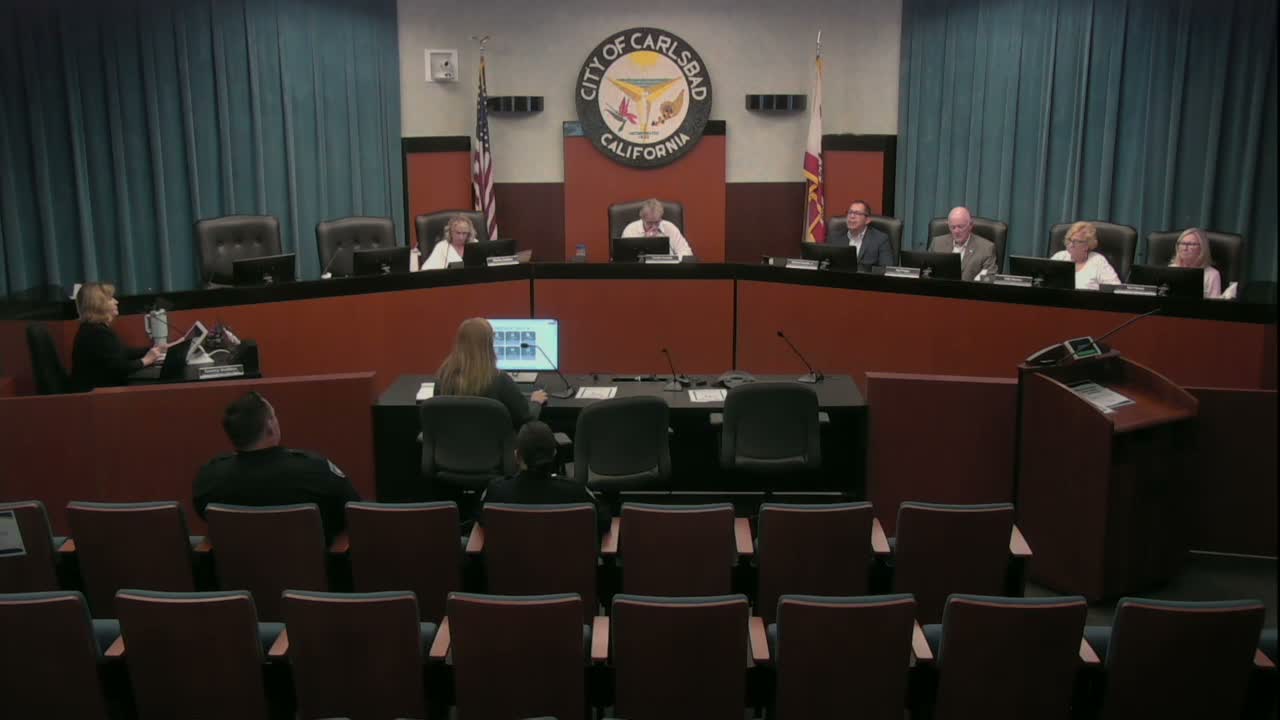
Sergeant Brett Cosgrove presented the Carlsbad Police Department's active-shooter posture to the commission, describing changes in operational doctrine, training investments and interagency preparedness exercised with schools, large venues and first responders.
Cosgrove defined an active shooter as "an individual actively engaging in killing or attempting to kill people in a confined space and a populated area," noting it does not have to involve a firearm. He traced law-enforcement response changes since Columbine and Uvalde and explained the department's proactive measures, including run-hide-fight trainings for businesses, large-scale exercises (the department conducts a yearly exercise at Legoland) and school threat-assessment protocols.
The department has a SWAT-based active-shooter cadre, Cosgrove said, and cited training benchmarks: cadre members receive a basic SWAT course and post-active-shooter instruction, patrol officers receive recurring post-certified training and scenario-based dynamic firearms and defensive-tactics practice, and medical skills (tactical combat casualty care) are included so officers can support victims immediately after neutralizing threats.
Equipment and response posture include ballistic helmets and plates for patrol, breaching tools, an armored rescue vehicle (Bearcat), drones, K9 units and staging of quick-reaction forces. Cosgrove emphasized the operational framework: "There's really two phases that are critical: stop the killing... then transition to stop the dying," describing how police and fire coordinate rescue-task-force corridors and warm-zone casualty collection points.
In Q&A, commissioners asked about negotiators (the department has a crisis negotiation team and benefits from a volunteer former FBI negotiator who provides training), incident command lessons from Uvalde (importance of early command and communication), and how the department balances acceptable risk to officers and civilians. Cosgrove said decision-making and training emphasize critical thinking and alternate tactical options (e.g., window entries and distraction) rather than fixed templates.
Cosgrove noted much of the training was grant-funded and the department conducts regular community-facing events including the Citizens Police Academy.