Get Full Government Meeting Transcripts, Videos, & Alerts Forever!
Get email alerts on the Affordable Housing Fund topic
No spam. Unsubscribe anytime.
Housing commission says Affordable Housing Fund leveraged $155M in FY25, highlights homeless assistance
Summary
San Diego Housing Commission reported $19.5M in FY25 Affordable Housing Fund revenue and $18.1M in commitments, including $12.3M spent on homelessness programs that assisted 4,100+ households; IBA noted revenue volatility tied to large development payments.
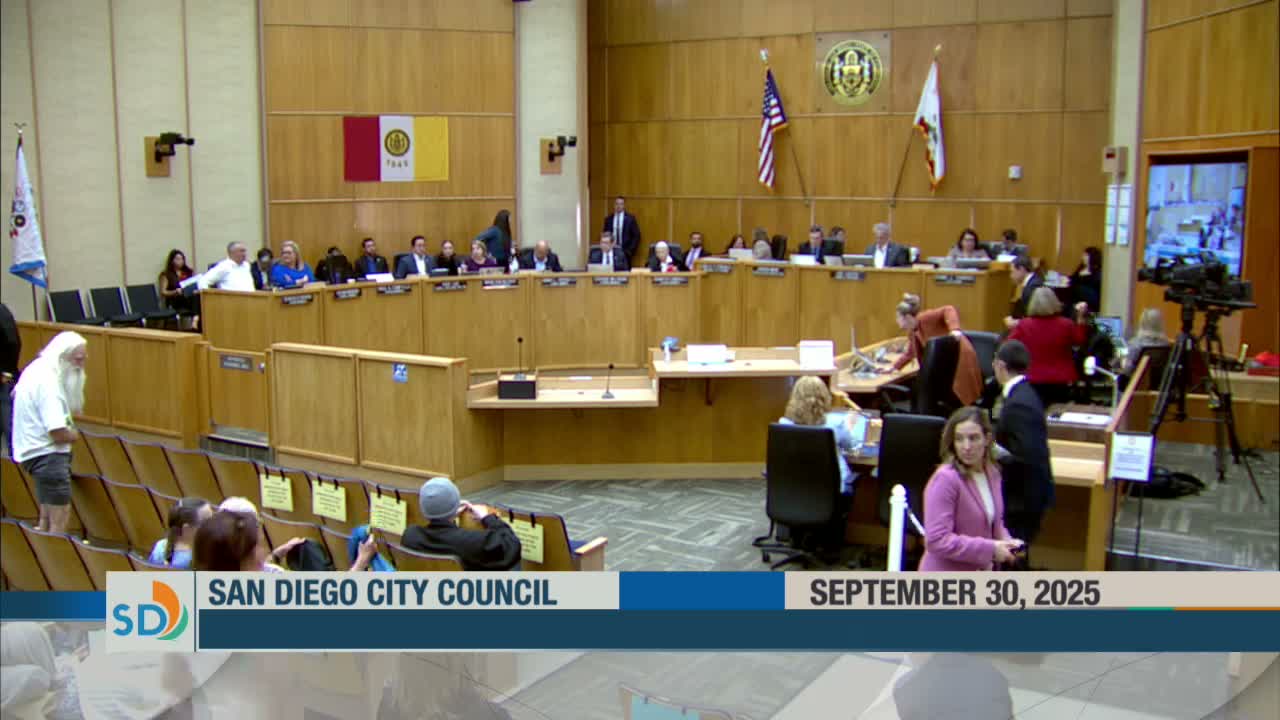
San Diego Housing Commission staff presented the fiscal year 2025 Affordable Housing Fund (AHF) annual report to the City Council on Sept. 30, reporting that the fund received roughly $19.5 million in revenue during the year and committed $18.1 million to programs that leveraged more than $155 million in total development and program resources.
Suket Dial, executive vice president and chief financial officer for the Housing Commission, said the AHF continues to be a critical tool for building and preserving affordable homes and supporting homelessness responses. "These funds are critical tools that allow us to develop and preserve affordable housing, support programs that address the homeless crisis, and leverage additional non‑city funding to maximize impact," Dial told the council.
The Housing Commission reported significant investments in homeless services in FY25 — roughly $12.3 million — and said those resources helped more than 4,100 households during the year, including emergency shelter services for 2,343 households across five locations. Investment in rental housing finance closed financing for 184 affordable units, and two additional developments completed construction and began accepting residents.
The Independent Budget Analyst's office noted two items for council attention: the large one‑time revenue swings tied to a small number of developments choosing to pay the AHF in lieu, and a drop in the number of inclusionary housing units recorded under the ordinance for FY25 compared with prior years. "The notable increase in revenue is due to two developments that opted to pay the AHF in lieu and underscores the volatility of the fund overall," IBA analyst Amy Lee said.
Councilmembers discussed whether the fund’s priorities and allocation approaches should be revisited to emphasize acquisition and preservation and to ensure programs reach very‑low‑income households. Housing Commission staff said acquisition of recent market‑rate units and more prevention‑focused spending can be more cost‑effective than ground‑up development and said they will bring more analysis back to council when requested.
Because the item was informational, no vote was required. Councilmembers asked staff to provide additional analysis on how to interpret the year‑to‑year variation in AHF revenue and how the fund can be used to expand homeownership, increase very‑low‑income production, and pursue preservation strategies.