Get Full Government Meeting Transcripts, Videos, & Alerts Forever!
Get email alerts on the Water Rates topic
No spam. Unsubscribe anytime.
San Diego council delays vote on proposed water, wastewater rate increases after hours of public testimony
Summary
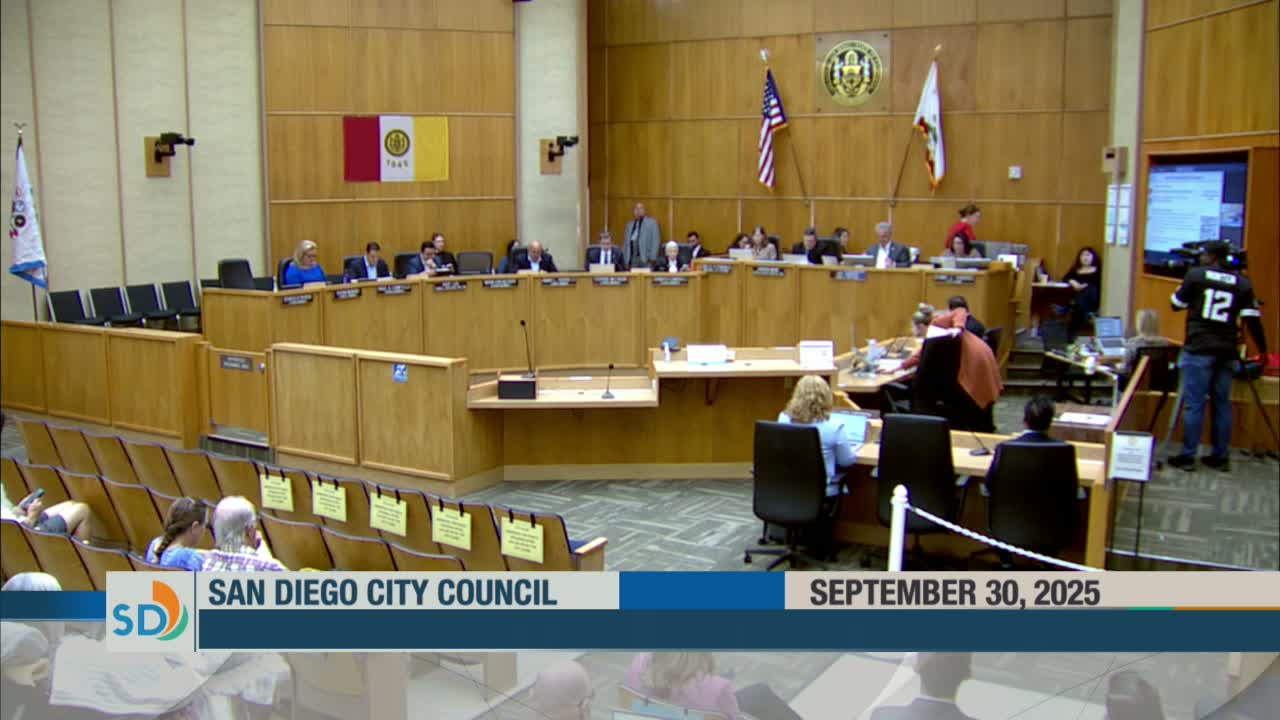
After hours of public comment — including thousands of mailed protests and dozens of residents urging relief for low‑income households — the San Diego City Council voted 8–1 on Sept. 30 to continue the proposed water and wastewater rate schedule to Oct. 28 for further analysis and outreach.
The San Diego City Council on Sept. 30 paused a decision on proposed adjustments to city water and wastewater rates after an extended public hearing and sustained public opposition, voting 8–1 to continue the matter to the council meeting on Oct. 28, 2025.
The hearing focused on proposed multi‑year increases derived from Public Utilities Department (PUD) cost‑of‑service studies and a planned pass‑through of wholesale increases from the San Diego County Water Authority. PUD Director Juan Groh and staff outlined efforts to reduce customer impacts — including $360 million in savings across programs and deferred capital projects — but said wholesale costs and operational needs still require rate action. “Without Pure Water, wastewater customers would face a 53% rate increase just to comply with federal regulations,” PUD staff told the council during the presentation.
Dozens of speakers from around the region filled council chambers and the virtual queue. Many residents said the proposed rise would be unaffordable for seniors, people on fixed incomes, and low‑wage workers. “We are now going to have the highest water rates in the country, and that's not something to be proud of,” said Steven Clemens, a resident who urged the council to seek additional efficiencies. Labor representatives and some utility workers urged approval or compromise, saying deferred maintenance and staffing cuts would raise long‑term costs and risks.
The clerk reported 5,225 mailed and submitted protests during the 62‑day notice period; city staff said a majority protest threshold would require roughly 130,296 protests. IBA (Independent Budget Analyst) staff Jordan Moore warned the council that declining to approve needed revenue could force PUD to make deep operating cuts — including an estimated $105.6 million in water‑system reductions — unless alternative revenues are found.
Council members repeatedly framed the choice as a tradeoff between affordability and the city’s ability to maintain aging infrastructure and comply with regulatory requirements. Councilmember Whitburn told colleagues bluntly, “The rates will not go up another 62%. This is a nonstarter,” and pushed staff and the water authority to find lower figures. Council President LaCava moved to continue the item, requesting additional PUD analysis of alternative rate schedules and possible non‑rate revenue streams; the motion was seconded by Councilmember Whitburn and passed 8–1 with Councilmember Moreno opposed.
The continuance requires staff to return with clearer scenarios that show the impacts of different schedules, an initial assessment of non‑rate revenue opportunities, and additional public engagement. The council also invited the San Diego County Water Authority to return to the Oct. 28 hearing to explain the wholesale components that drive the city’s bill. County Water Authority representatives at the meeting described ongoing work to sell excess supplies to other agencies and said they would continue to pursue affordability strategies at the wholesaler level.
Next steps: The council will reconvene discussion on Oct. 28, 2025. PUD was asked to provide comparative rate schedules, the results of follow‑up outreach, and an initial analysis of non‑rate revenue options that might reduce pressure on ratepayers.