Get Full Government Meeting Transcripts, Videos, & Alerts Forever!
Get email alerts on the Water Rates topic
No spam. Unsubscribe anytime.
San Diego council sets Sept. 30 hearing on proposed water and wastewater rate increases
Summary
After presentations from Public Utilities and the IBA, the City Council voted 6–3 to set a Sept. 30 public hearing under Proposition 218 and AB 2257 to consider rate adjustments that would take effect Jan. 1, 2026; council debate focused on affordability and county wholesale costs.
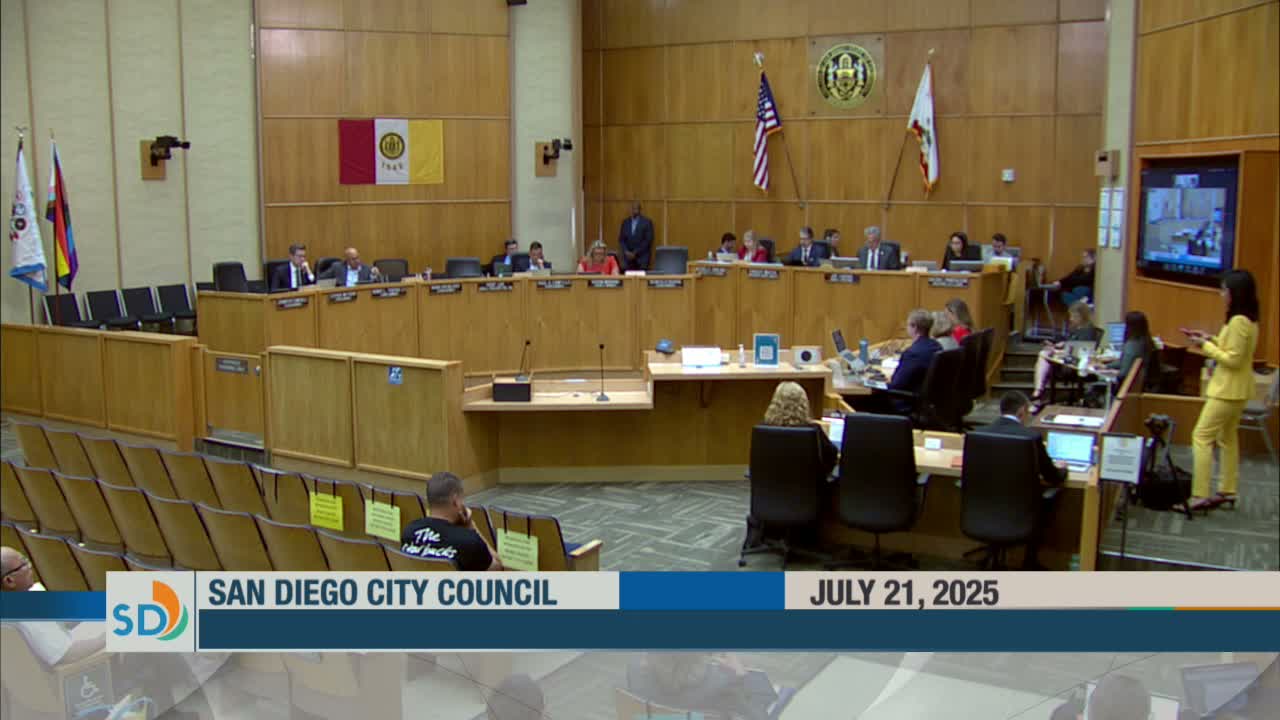
The San Diego City Council voted 6–3 on July 21 to set a Sept. 30 public hearing to consider proposed water and wastewater rate adjustments that would take effect Jan. 1, 2026, if ultimately approved.
Public Utilities Department Executive Assistant Director Lisa Salaya told the council the city manages a massive water system — about 6,300 miles of pipelines and nearly 2,000 staff — and purchases between 70% and 90% of its water from the San Diego County Water Authority (CWA). She said rising wholesale costs from the CWA, along with energy, chemical and infrastructure pressures, are the primary drivers of proposed rate increases. Salaya said the CWA’s effective rate increase for 2026 is 8.3% (down from an initial 18% proposal) and that wholesale costs will add roughly $16 a month for the average single-family customer in 2026, with the city’s own portion adding about $1.29 for water and $0.80 for wastewater.
Jordan Moore of the Office of the Independent Budget Analyst (IBA) said his office engaged Stantec to review PUD’s cost-of-service studies and that Stantec found the studies to be sound while recommending additional technical refinements. Moore and the IBA noted pending litigation over tiered rates could require adjustments before final action in September.
In public comment, residents urged the council to prioritize affordability. Speakers said rate increases could force some households to choose between paying for water and food and pressed the council and the CWA for greater scrutiny of capital programs and spending. One commenter cited a 28% reduction in a fixed sewer charge shown in the sewer report as a positive data point.
During council debate, members repeatedly separated the county wholesale cost (the CWA charge the city must pay) from the city’s own operating and capital needs. Council Member Elo Rivera, who moved the staff recommendation to set the hearing, said delaying the hearing would jeopardize the city’s ability to recover revenue beginning Jan. 1 and would force deeper cuts to services. Council members who opposed immediate action said they want stronger commitments from the CWA to reduce its capital program and to explain recent choices in a public forum.
Nick Serrano, chair of the County Water Authority and deputy chief of staff to the mayor, told the council the CWA has been working to monetize excess supplies after settling longstanding litigation with the Metropolitan Water District and said he would ask the authority to attend the September hearing to answer questions about transfers and cost savings.
The council’s motion to set Proposition 218 and AB 2257 procedures and mail required notices was moved by Council Member Elo Rivera and seconded by the Council President; the motion passed on a 6–3 vote.
Next steps: the city will mail Proposition 218/AB 2257 notices in advance of the Sept. 30 hearing. If the council approves rate increases at that hearing, PUD staff said the adjusted rates would go into effect Jan. 1, 2026. Staff and the IBA signaled they may refine the studies and rate design ahead of the hearing in response to litigation and additional analysis.