Get Full Government Meeting Transcripts, Videos, & Alerts Forever!
Get email alerts on the Homelessness topic
No spam. Unsubscribe anytime.
Officials report expanded housing and shelter capacity but say thousands more units and prevention resources are needed
Summary
City staff and regional partners told council the network of crisis response and housing increased significantly since 2019 (beds and shelter options nearly doubled), point‑in‑time counts dropped 13.5% in the city, but gaps remain: about 3,090 rapid rehousing units and 2,939 supportive housing units are still needed to meet 2029 goals and diversion/prevention remain top priorities.
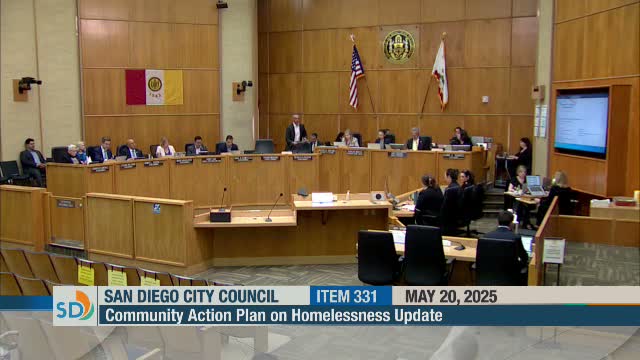
City and regional homelessness officials briefed the San Diego City Council on May 20 about progress under the Community Action Plan on Homelessness and the updated 2023 needs analysis, reporting measurable increases in shelter and housing capacity and early signs of improved outcomes.
Sarah Jarman of the city’s Homelessness Solutions and Strategies Department, Tamara Koller of the Regional Task Force on Homelessness (RTFH), and partners described a 91% net increase in crisis response and housing inventory in the city since 2019 (from 5,745 beds to 11,001 as of 2025) and noted that nearly 12,000 people moved to permanent housing between 2019 and 2023. They credited coordinated efforts — new supportive housing projects, HomeKey conversions, a larger flexible housing pool, expanded safe parking and safe‑sleeping sites, and targeted diversion programs — with helping reduce the city’s point‑in‑time homelessness tally by 13.5% and regional counts by 7%.
The update emphasized that, despite those gains, system modeling shows substantial remaining needs through 2029: staff said the city still requires roughly 3,090 rapid rehousing units and 2,939 supportive housing units to meet the goals set by the updated analysis. The presentation gave per‑unit cost estimates used in planning: emergency shelter bed nights at an FY26 budgeted nightly cost (approximately $67–$72 per bed night), supportive housing operating costs of roughly $25,000–$33,000 annually per household, and capital development range estimates in the hundreds of thousands per unit.
Regional diversion programs were highlighted as highly cost‑effective: a targeted shelter diversion initiative launched in November 2024 aimed to move 150 residents into permanent housing, and by May 12, 2025, staff reported 154 households housed, surpassing that goal; staff said diversion increased throughput from shelter to housing by roughly 5–9 percentage points in the initiative months. Housing retention outcomes for flexible housing pools showed higher‑than‑national‑average retention (roughly 95% after one year and 97% after two years).
Councilmembers asked detailed questions about how HAP/Housing Accelerator Program funding will be used, the city’s contingency plans if state funding is structured differently than expected, the role of the county in shelter and HAP decisions, and how to address rising senior homelessness. Staff said contingency steps include reworking joint applications and braiding federal, state and philanthropic funds; they also noted that many prevention/diversion dollars are not eligible under federal funding streams and require flexible sources.
Multiple people with lived experience and providers spoke during public comment, urging sustained funding for prevention and diversion programs, raising retention and quality concerns in some permanent supportive housing projects, and asking council to protect funding for shelters such as the Rosecrans site. Councilmembers expressed support for prevention and diversion as cost‑effective tools and asked staff for modeling that links diversion/prevention investments to shelter‑bed turnover (throughput) and to quantify how many shelter beds could be freed annually by expanded diversion.
Staff said they will continue to coordinate with SDHC and RTFH, update dashboards, and bring forward further data and modeling to inform FY26 budget decisions.