Get Full Government Meeting Transcripts, Videos, & Alerts Forever!
Get email alerts on the Consumer Protection topic
No spam. Unsubscribe anytime.
Council updates grocery pricing transparency ordinance to allow in‑store alternatives, delays enforcement to October
Summary
Councilmembers amended the grocery pricing transparency ordinance to replace a printed‑coupon requirement with flexible in‑store alternatives of equal value (kiosks, checkout barcodes, customer service override), exempt paid membership discounts, set enforcement to begin October 1, and add an annual review process.
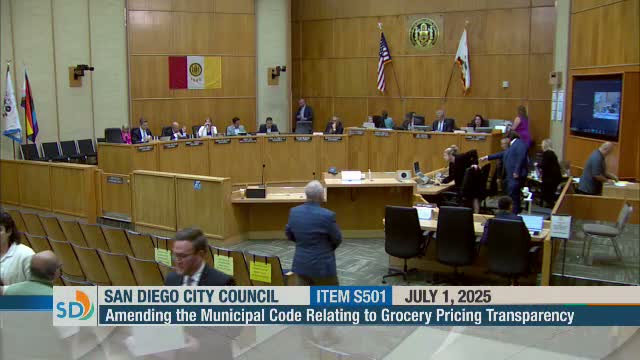
Councilmember Von Wilpert presented targeted amendments to the grocery pricing transparency ordinance the council passed on April 15. Staff explained the changes are intended to preserve the ordinance’s equity goals while making compliance practical for retailers.
Key amendments replace a requirement that stores print digital coupons with an obligation to provide an "in‑store alternative" of equal value on request — such as a kiosk, scannable barcode at checkout, or customer service override. The amendments also clarify the definition of "grocery store" (aligning with NAICS/census definitions), exempt paid membership and subscription discounts, set an enforcement start date of October 1 to allow retailers time to implement, and create an annual review process overseen by the city manager.
Public commenters — including senior advocates and representatives of the California Grocers Association and the San Diego Regional Chamber of Commerce — expressed support for the amendments while urging robust outreach and help for seniors, SNAP recipients and library users who may lack printers or smartphones. Councilmembers emphasized equity for older and low‑income shoppers and the need to learn from implementation before expanding the model nationally.
Council voted to introduce the amended ordinance (first reading) and will return for final adoption at a subsequent meeting. The clerk recorded the motion to move the ordinance forward and a recorded vote in the meeting minutes.