Get Full Government Meeting Transcripts, Videos, & Alerts Forever!
Get email alerts on the Urban Forest topic
No spam. Unsubscribe anytime.
National City staff pitch urban forest plan to increase canopy and formalize maintenance
Summary
Public Works presented an urban forest management plan recommending monitoring, species diversity, a two‑to‑four year grid trimming schedule and partnerships to plant about 1,500 more trees over time; staff warned planting success depends on long‑term watering and maintenance resources.
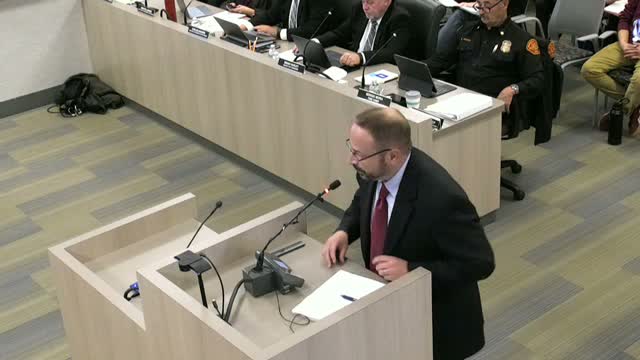
Steve Manganelle, director of engineering and public works, presented National City’s urban forest management plan, outlining the city’s inventory, canopy goals and implementation challenges.
Manganelle said the 2016 inventory identified roughly 9,400 trees and that updated counts are near 9,500. The plan proposes targets (including a possible 20% canopy goal), codified maintenance standards, a tree preservation ordinance (chapter 13.18) and a monitoring plan tied to a GIS work‑order system. "This document really takes all that information, helps work with the community and the council on implementing some policies," he said.
West Coast Arborist vice president Mike Powell described the inventory methodology and explained why many suitable planting sites appear concentrated in the West side of the city: public right‑of‑way parkways there provided plantable strips that were surveyed as vacant suitable sites. Powell and staff also stressed the challenge of establishing new trees without long‑term watering — many grant programs cover planting but not multi‑year maintenance or stump grinding.
Councilmembers pressed for native species where appropriate, more plantings on the East side and clearer measures for success. Staff said the city’s trimming grid takes about 2.5 years to cycle under current resources and that partnerships (WCA, Tree San Diego, Cal FIRE grants) help stretch capacity.
Why it matters: A healthier tree canopy reduces heat island effects, improves air quality and can produce long‑term energy and stormwater benefits. City staff said achieving and maintaining new plantings will require operational resources and community commitment to watering during establishment periods.
Next steps: Staff offered to provide maps of recent plantings and continue seeking grant funding and community partnerships; councilmembers volunteered to help promote block‑level watering commitments and target historically treeless neighborhoods.