Get Full Government Meeting Transcripts, Videos, & Alerts Forever!
Get email alerts on the Housing Policy topic
No spam. Unsubscribe anytime.
San Diego Housing Commission warns of $16.9M voucher funding gap; housing authority approves FY2026 budget
Summary
The San Diego Housing Commission told the Housing Authority it expects a $16.9 million gap this year between HUD MTW voucher allocations and rental assistance costs, will draw reserves to cover nearly 947 households in FY2026, and urged cost reductions and revenue steps as the Housing Authority approved the commission's $711.7 million budget.
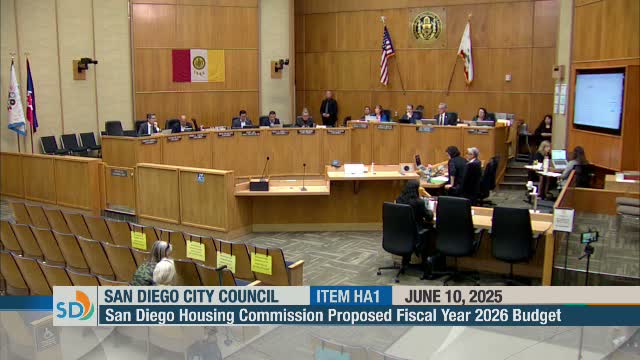
The San Diego Housing Commission presented its FY2026 budget to the Housing Authority on June 10 and warned that rental assistance costs will exceed HUD MTW allocations by about $16.9 million in 2026 — a shortfall that would require drawing agency reserves to keep nearly 947 households housed.
Lisa Jones, SDHC president and chief executive, told the Housing Authority that the agency can manage the projected shortfall for FY2026 by drawing down reserves but stressed the move is not sustainable. "We are relying on our diminishing reserves to meet our needs and balance our budget in fiscal year 2026," Jones said. She urged the Housing Authority and council members to pursue cost‑reduction and revenue opportunities and to work closely with SDHC on contingency plans.
Key figures in the SDHC presentation: - Projected gap between HUD MTW allocations and voucher rental assistance: $16,900,000 (approx.) - Households affected if gap covered from reserves: about 947 - Proposed affordable housing NOFA funds (AHF contribution): $9,800,000 (part of a $22.8M NOFA stack) - Proposed commitments from the affordable housing fund: $32,800,000 - SDHC proposed agency budget (after Rosecrans adjustment): $711,700,000
SDHC also presented a multi‑year picture of reserves for property needs and operating contingency. The agency said recent physical needs assessments identified capital requirements for aging affordable housing—about $16.8M of the agency’s FY2026 reserve balance is earmarked for capital needs in years two through four. Jones said SDHC will look for incremental revenue steps and operational savings, including careful rent setting for properties the agency owns, administrative efficiencies and targeted NOFAs that leverage state and local funding.
The Housing Authority voted unanimously to approve the SDHC’s FY2026 budget and directed staff to return with periodic updates. Several council members warned that federal budget uncertainty could make the situation worse: HUD’s FY2026 appropriations process remains unsettled and the SDHC asked to be briefed on programmatic mitigation steps should federal funding not materialize.
What happens next: SDHC will proceed with a fall NOFA using the funding allocations approved by the Housing Authority and continue work on administrative and operational measures to reduce costs; the commission will provide regular briefings to the Authority and council on reserves and voucher program stability.
Quotes: "Our goal is to have as little impact as possible on frontline staff," Jones said, noting ongoing negotiations with employee unions and that the SDHC did not anticipate layoffs of frontline represented positions at this time.
The Housing Authority approved the SDHC budget (voice vote) and requested updates as SDHC implements mitigation measures and monitors federal developments.