Get Full Government Meeting Transcripts, Videos, & Alerts Forever!
Get email alerts on the 101 Ash Conversion topic
No spam. Unsubscribe anytime.
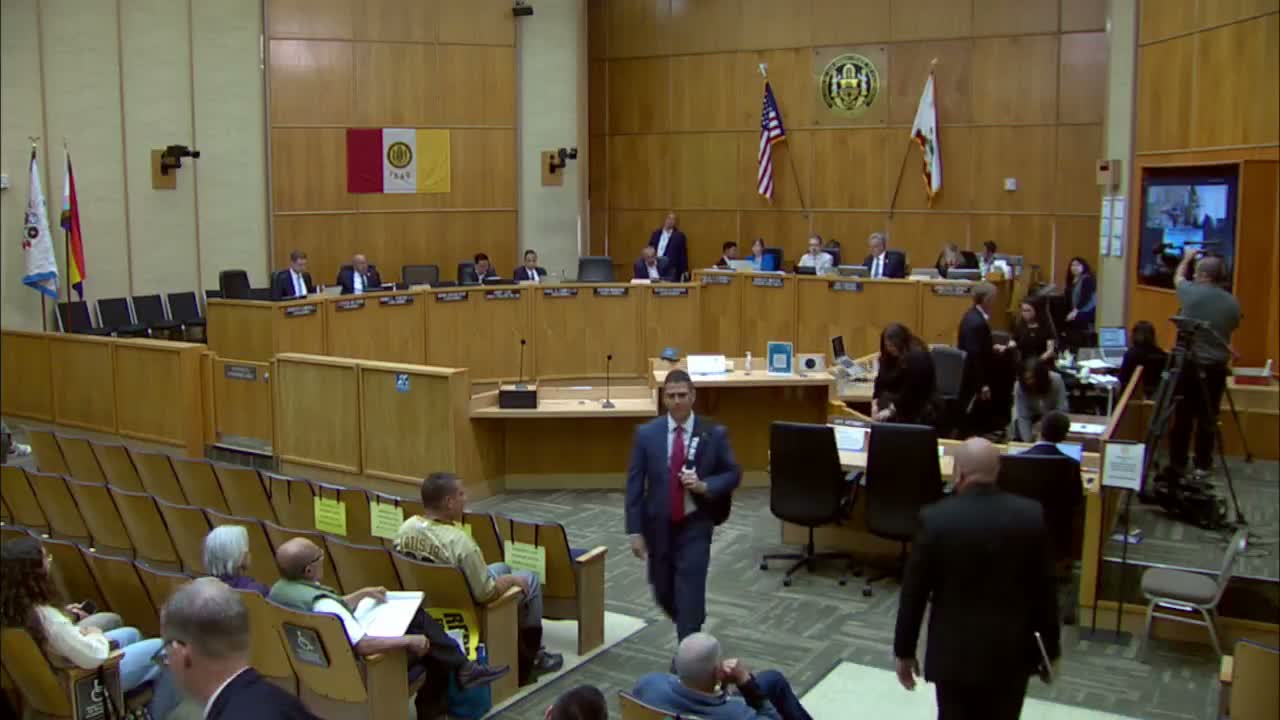
Council approves 101 Ash ground‑lease to convert vacant tower into 247 affordable homes and childcare
Summary
After multi‑month negotiations and a lengthy public hearing, the council approved a 60‑year ground lease and disposition agreement with MRK/CREATE to convert 101 Ash Street into 247 income‑restricted apartments, childcare and retail; the city retains ultimate ownership and will receive deferred payments and a seller's note.
The City Council on July 29 approved a negotiated disposition and 60‑year ground lease for 101 Ash Street that will transfer leasehold control of the long‑vacant 21‑story downtown tower to 101 Ash Venture LP (to be controlled by MRK Partners and CREATE Development) for an adaptive reuse conversion to income‑restricted housing.
Economic Development staff and the developer described a project that would create 247 deeply income‑restricted homes (targeting households at roughly 30%–80% of area median income, with an average AMI target near 60%), on‑site support services and a roughly 4,000‑square‑foot childcare facility plus about 25,000 square feet of ground‑floor commercial space. The developer and supporting consultants described a capital stack that leans on federal low‑income housing tax credits, federal historic tax credits, permanent loans and other tax‑exempt financing; direct construction cost and abatement were large line items in the pro forma.
Key business terms negotiated by staff include a 55‑year seller's note (residual receipts loan) of $45.6 million secured by a leasehold deed of trust, deferred developer fee structure (only about $3.8M of the projected developer fee is paid at closing; the balance is deferred and repaid from project cash flow), annual ground rent equal to the greater of $15,000 or 50% of residual receipts, and a 2% capital‑event fee on future refinancing or sale proceeds. EDD presented an estimated total future compensation to the City of roughly $90.2 million over the life of the lease in nominal dollars and an illustrative net‑present‑value comparison using a 10% discount rate; IBA and independent consultants advised that results are sensitive to discount rate and financing outcomes (IBAs' NPV examples ranged lower under conservative assumptions).
The Independent Budget Analyst and outside consultants reviewed the pro forma and financing assumptions and concluded the capital stack and off‑ramps were standard for California affordable housing transactions. The IBA noted the very high per‑unit cost (about $1.1M per unit in the developer''s proforma) is largely driven by abatement, contingency, the high share of 2‑ and 3‑bedroom family units and the adaptive‑reuse nature of the project. IBA recommended strong transparency and public reporting on awards, drawings, and major change orders.
Public testimony spanned support (labor, building trades, affordable housing advocates) and opposition (residents and watchdogs raising concerns over costs, the city's prior acquisition, developer fee size, building condition and asbestos risks). Developers said they had performed extensive due diligence including environmental sampling, and contractors and unions confirmed the developer proposed a project labor agreement and prevailing wages.
Council vote: after robust questioning and legal review, the council approved the disposition and ground lease; the record shows the motion passed unanimously with one councilmember absent.
What comes next: the developer must secure tax credits and construction financing during the escrow period (staff set a 24‑month escrow and several performance milestones and off‑ramps). If the developer fails to obtain financing or meet entitlements, the agreement contains termination rights for either party; if financing closes, the developer will assume maintenance and operations and the city will stop paying security and maintenance costs for the vacant tower. The city retains future reversion rights: at the end of the lease term the improved asset reverts to the City unless the parties renegotiate.