Get Full Government Meeting Transcripts, Videos, & Alerts Forever!
Get email alerts on the Local Budget topic
No spam. Unsubscribe anytime.
San Diego council adopts FY2026 budget after long debate, restores libraries and parks
Summary
After hours of testimony and debate, the City Council voted 7–2 on June 10 to adopt a revised FY2026 budget that restores Monday library hours, recreation center and restroom services, and other community priorities while relying on several new revenue assumptions the independent budget analyst called ‘risky.’
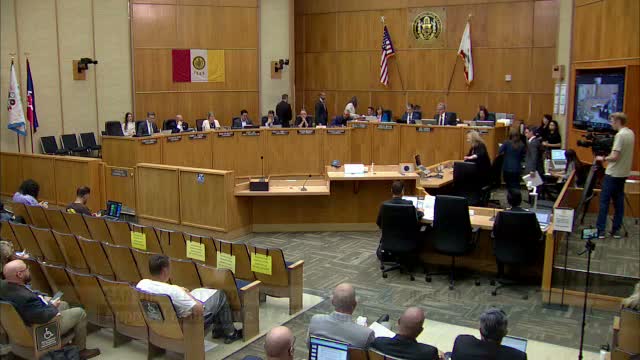
The San Diego City Council approved a revised fiscal year 2026 budget on June 10 after a daylong debate and extensive public comment, adopting a package of restorations to the mayor’s proposal while relying on new revenue assumptions the council’s budget office said would need close follow‑up.
Council President Lacava opened final remarks saying the package ‘‘identifies new revenue while furthering the work of reducing our structural budget deficit’’ and urged the city and council to ‘‘dig in and deliver.’’ The motion to adopt the amended budget passed 7–2, with Councilmembers Campbell and Moreno voting no.
The package restores full Monday hours at 14 library branches, returns recreation center hours that were slated for cuts, and funds public restroom services at beaches and parks. The council also moved to reopen recreational access at reservoirs and added funding for brush management and other public‑safety‑related mitigation measures.
Budget chair Henry Foster, who authored the council motion, said the restorations reflect public priorities raised during the hearings and credited the independent budget analyst’s (IBA) work in identifying additional resources. ‘‘These restorations are essential services,’’ Foster said during debate, arguing the council had to balance fiscal caution with community needs.
Charles Modica, the city’s independent budget analyst, urged caution. ‘‘Two hours does not give my office sufficient time to vet items,’’ Modica said of a late memo of proposed revenue actions (including accelerated zoo and Balboa Park parking, billboard digitization and credit‑card transaction fees). He warned that assuming those revenues for FY2026 exposes the city to midyear shortfalls if they do not materialize.
Council members repeatedly acknowledged that the adopted budget depends on a mix of one‑time and ongoing revenue changes and on implementation by the mayor’s office and departments. The package gives staff authority to draw on the general fund stability reserve if needed, a contingency several council members said should be used only as a last resort.
Public comment at the hearing was extensive: residents pressed the council to do more on homelessness and to preserve libraries and parks, while many speakers urged the council to defund or condition spending on automated license plate readers (ALPR), citing risks to immigrant communities. The council made ALPR and smart‑street‑light contract payments contingent on a follow‑up review and council approval of the annual surveillance report.
What happens next: the resolution will be transmitted to the mayor for review (the mayor may veto items under the charter). Council leaders said they will continue monitoring receipt of the newly assumed revenues and will use budget monitoring reports and follow‑up items to adjust course if receipts and implementation differ from projections.
The vote: Council approved the budget 7–2 (Campbell and Moreno opposed). The mayor’s office and departments must now carry out the actions and the IBA will track the revenues and risks the council relied on to balance the plan.
The council adjourned to a noon recess and later returned to complete the day’s remaining business.