Get Full Government Meeting Transcripts, Videos, & Alerts Forever!
Get email alerts on the Education Curriculum topic
No spam. Unsubscribe anytime.
Teachers, students and parents urge Modesto board to keep computer literacy and prep providers
Summary
Dozens of teachers, computer literacy instructors (CLTs), parents and students told the Modesto City Schools board they oppose a district proposal to eliminate elementary computer literacy and prep-provider positions, raising concerns about CAASPP readiness, keyboarding, supervision and student safety.
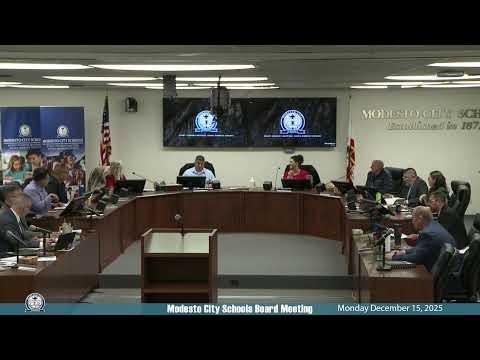
A steady stream of teachers, classified staff and parents urged the Modesto City Schools Board of Trustees on Dec. 15 to halt plans that would eliminate elementary computer literacy teachers and prep providers and replace them with a restructured arts and music model.
The public-comment period, which ran more than an hour, included classroom teachers, current CLTs and student leaders who described computer literacy as a foundational program that teaches keyboarding, digital citizenship and testing navigation that supports CAASPP readiness. "The restructuring of the day will not alleviate the forever overflowing plate of an elementary educator," said Angela Long, a 36-year classroom veteran and Modesto teacher. "Trust your people who know what is best for the students they teach and love," she added.
Union leaders framed the complaint as a negotiation and process issue. Jennifer McGrath, president of the Modesto Teachers Association, told the board the district's bargaining approach has felt rushed and said sweeping proposals should be piloted and phased. "It just seems cruel, which is why everyone came out tonight," McGrath said, characterizing teacher morale and retention risks tied to the proposal.
Speakers raised specific implementation questions the board asked staff to answer: how the district would safely supervise groups of up to 70+ students during rainy-day PE or combined art/music blocks; whether Prop. 28 funding and curriculum choices had been fully analyzed; who would staff VAPA positions and how class-size or capacity would be capped; and whether the cost of instruments, consumable art supplies and sanitation plans had been budgeted. "If it's not a plan, it's an idea," said Lisa Allen, a 30-year district employee, urging more concrete curriculum and staffing detail before any change.
Student speakers described long-term effects. "None of this would have ever been possible without being taught computer literacy at an elementary school," said Preston Silva, a senior who credited early keyboard and digital skills with later academic and internship success. Computer literacy instructors likewise described steady curricula in digital media, coding and keyboarding that they said cannot be absorbed by classroom teachers without reducing core instruction time.
Board members acknowledged the volume of public concern and several asked staff for clarifying reports. Trustee Marks requested a formal follow-up on contract item D5 that was approved separately; another trustee asked that the district provide details about curriculum, class-size caps, equipment budgets and how special education will be served under the proposed schedule changes.
The board did not take final action on the computer-literacy proposal at the meeting. Several trustees requested additional information and said they wanted to see more planning detail and stakeholder input before approving structural changes.
What happens next: trustees asked staff to return with clarifying details (budget line items, curriculum documents, planned class sizes and safety plans) in a future agenda item so the board can evaluate the operational viability of the proposal and outstanding bargaining questions.