Get Full Government Meeting Transcripts, Videos, & Alerts Forever!
Get email alerts on the Budget Audit topic
No spam. Unsubscribe anytime.
Audit: Berkeley Heights district receives clean opinion but auditor flags student-activity controls
Summary
The district's annual comprehensive financial report earned an unmodified (clean) opinion from auditors, who found one repeat compliance exception: student activity accounts lacked consistent dual-signature checks and timely posting of receipts. The board accepted the audit and reviewed fund-balance components.
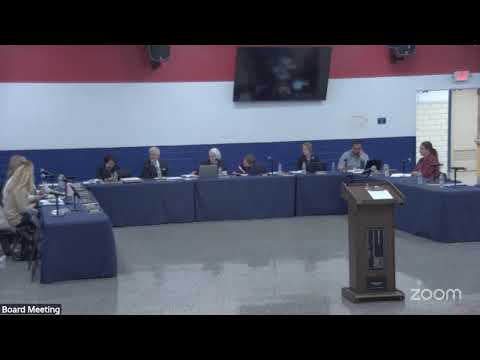
The Berkeley Heights Board of Education accepted its annual comprehensive financial report after auditors told the board they issued an unmodified opinion — the 'clean' standard — on the district's financial statements and the state single-audit. Auditor Bill Swisher told the board the audit found one repeat exception related to student activity accounts: "we noted several checks only contain 1 approval signature," and some cash receipts were not posted the day they were received. He recommended that student-activity checks "contain 2 approval signatures and cash receipts be posted to the cash receipts ledger."
Swisher walked the board through components of the district's fund balance, saying the district began the year with an operating fund balance and ended with components that included year-end encumbrances ($1,400,000), capital reserve ($3,437,000), maintenance reserve ($915,000), an unemployment reserve ($450,000) and an unassigned balance (about $1,332,000). He cautioned that much of the reported surplus is restricted or already spoken for, leaving a smaller technical unassigned balance.
During follow-up questions, board members pressed whether the large swing in the state-calculated 'excess surplus' between fiscal years was driven by state-aid reporting or enrollment counts. Swisher said the change stemmed largely from lower lapses in appropriations and differences in revenues rather than an immediate change in state aid, which he said had remained stable.
Online commenter John Maguez urged the board to "pour through the ACFR" and compare actual spending to prior budgets; he singled out security spending as an area he will monitor.
The board discussed next steps for addressing the student-activity finding and accepted the audit in the meeting. The auditor recommended managerial action to enforce dual-signature controls and prompt recording of receipts; the board directed administration to follow up as appropriate.