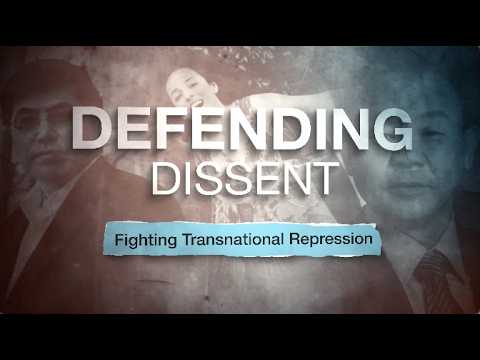
FBI briefing details transnational repression cases and urges exiles to report threats
Loading...
Summary
At an FBI briefing, officials described a pattern of foreign governments targeting exiled dissidents in the U.S., recounting cases of alleged Chinese campaign interference and an alleged Iranian kidnapping plot, and urged victims to contact law enforcement; the FBI highlighted multilingual resources and protective steps.
An FBI official described transnational repression as a global problem in which foreign governments reach beyond their borders to silence, intimidate or harm exiled dissidents, journalists and minority communities, and urged people who face such threats to contact the bureau.
The briefing outlined three illustrative U.S.-based cases. In one, presenters said communications and undercover work uncovered a campaign by an individual in Beijing, identified in the briefing as Lin Chi Ming, who directed a New York private investigator to collect or fabricate damaging material on a U.S.-based candidate and to impede that person’s election prospects. "We will not tolerate such a repression here when it violates our laws," an FBI official said, describing steps taken to move the candidate to a safe location and to document foreign-directed efforts.
In a second case, the FBI described an alleged scheme to kidnap an Iranian activist from her Brooklyn home, move her through a port, transport her to Venezuela and then fly her to Tehran for prosecution. Presenters said agents arrested a suspect seen acting suspiciously outside the activist’s residence and recovered video evidence showing an assault rifle in the vehicle. The activist—identified during the briefing as Masih Alinejad—was moved to safe houses while the investigation continued. "We immediately set up a perimeter," an FBI official said, describing counter‑surveillance and subsequent arrests.
A third case recounted investigators’ work on an alleged insider within a New York pro‑democracy circle. Agents reportedly recovered handwritten notes that listed identifying information for more than 60 dissidents and phone numbers tied to foreign intelligence officers; undercover tactics gained access to the suspect’s electronic devices and email accounts, producing diary entries and reports on dozens of targets. "We were able to unravel the entire network," an FBI official said.
Speakers at the briefing emphasized the human toll on exiles and their families, including coerced denouncements on state television, imprisonment of relatives in the homeland, online death threats, and ongoing fear for personal safety. One participant described seeing a man outside her door with a rifle and later learning the individual had been tasked to assassinate her.
Officials described the bureau’s outreach and practical supports: an FBI website with an easy-to-understand threat-intimidation guide translated into more than 60 languages; trained call-center staff and language support; partnerships with state, local and international law‑enforcement authorities; and operational steps such as safe‑housing, counter‑surveillance and undercover operations. "We will protect you," an FBI official said. The presenters cautioned that victims are often reluctant to come forward and said the FBI’s relationship with affected communities is critical to disrupting threats.
The briefing closed with a reminder that reporting matters. FBI presenters urged anyone experiencing threats tied to foreign governments to contact law enforcement, stressing confidentiality and promising investigations into credible threats. The bureau said it will continue to work with partners to impose costs on nations that engage in transnational repression.