Get Full Government Meeting Transcripts, Videos, & Alerts Forever!
Get email alerts on the Council Compensation topic
No spam. Unsubscribe anytime.
Sedona work group opens study of council pay, assigns Flagstaff benchmark and data tasks
Summary
The Sedona Council Compensation Work Group met on March 17, 2026, to outline research, assign benchmarking and survey tasks, and plan community outreach as it studies whether to change council pay and benefits.
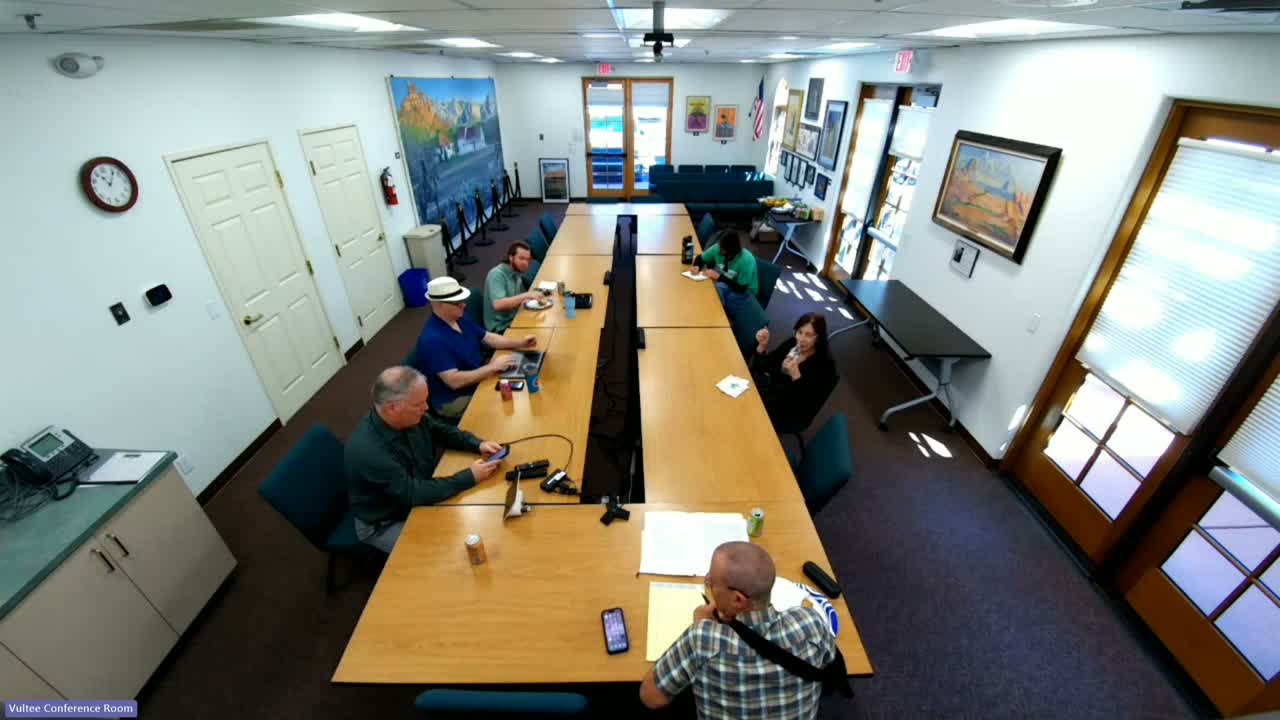
Council member Pete Furman convened the City of Sedona’s new Council Compensation Work Group on March 17, telling members the group’s job is to study council pay and benefits and make a recommendation to the full council.
“Public service is generally a volunteer position,” Furman said, but added he is “open to the idea of a wage that perhaps offsets the opportunity, lost opportunity cost of public service,” noting that council work in Sedona can be “nearly full time.” Furman asked the group to surface their priors and cautioned members to keep deliberations civil and public.
Members introduced themselves and explained why they joined. Sean Smith identified himself as a Sedona resident and housing advocate who wants a more diverse candidate pool. Rob Telensky, owner of CompassCrowd, said he has pushed for council pay since 2017. Kalei Gajewski, a business owner and Planning and Zoning member, said she supports compensation and urged the group to consider benefits such as health coverage to reduce the personal cost of serving. Laura Rubin, a long‑time Sedona resident and former fire board official, said any compensation should balance fairness with the risk that money could distort civic motivations.
The group set immediate tasks and methods. Furman volunteered to assemble a Flagstaff case study and other background materials about why and how that city changed its council compensation. Staff liaison Russ Martin agreed to pull League of Cities compensation survey data and to create a shared city folder to collect benchmarking responses, documents and suggested questions. Members discussed creating a uniform matrix of data points (population, budget per capita, public works workload, median age, housing costs) and proposed surveying current and former council members and recent candidates about hours spent preparing and serving. Furman said he will invite the city attorney to the next meeting to outline legal constraints, whether pay can be declined or donated and what procedural options exist.
On outreach, members asked the communications team to publish information about the group’s work and discussed the possibility of public forums; a recurring theme was the need to explain the role and time demands of council service so community reaction is informed when recommendations reach the dais.
The work group agreed to continue meeting and began scheduling logistics; members tentatively planned a follow‑up meeting on the 20th at 9:30 a.m., pending confirmation and posting under open‑meeting rules. Furman closed the meeting at about 12:29 p.m.
What they did not decide: the group did not set a specific dollar proposal. In the meeting transcript participants discussed the current council stipend as very small; the transcript contains figures that appear to be transcription errors and the exact current monthly pay should be confirmed with the city clerk’s office.