Alaska Senate Judiciary Committee reports SB 252 on electronic secured-transactions records
Loading...
Summary
At its April 1 meeting the Alaska Senate Judiciary Committee reported Senate Bill 252, the "Uniform Commercial Code Secured Transactions Electronic Records," from committee after a motion and no public testimony; the measure was forwarded with individual recommendations and attached fiscal notes.
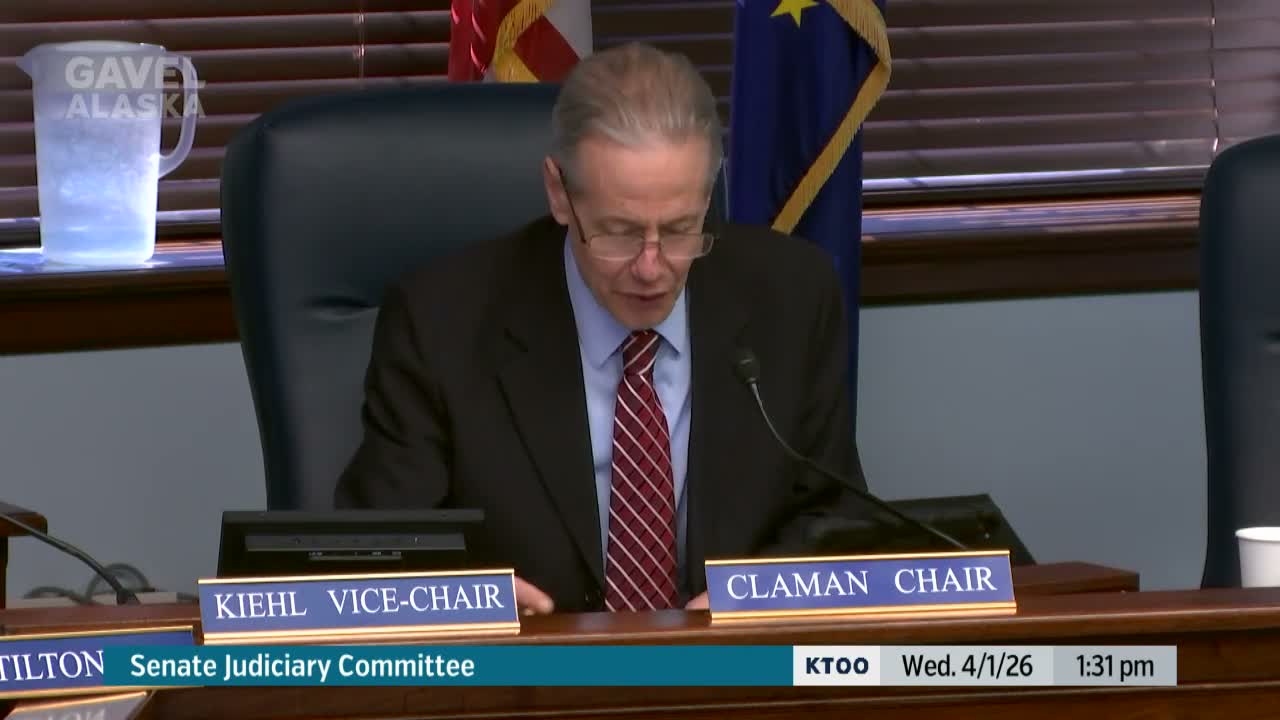
The Alaska Senate Judiciary Committee on April 1 advanced Senate Bill 252, titled the "Uniform Commercial Code Secured Transactions Electronic Records," moving the bill from committee to the full Senate after a motion and no objections. Chair Senator Clayman presided over the committee’s second hearing on the measure.
Senator Kiel moved that the committee "report Senate Bill 252 from committee with individual recommendations and attached fiscal notes," stating the motion and citing work-order number 34LS0294/N. During the exchange members clarified the work-order number after an initial misstatement.
Chair Senator Clayman opened and closed public testimony, saying no one in the room or online had signed up to testify. He noted that Ben Orzewski of the Uniform Law Commission in Chicago was available remotely for questions but was not called to speak. "The first and only item on our agenda today is Senate Bill 252, the Uniform Commercial Code Secured Transactions Electronic Records, sponsored by my office," Clayman said as he introduced the bill for the record.
After Senator Kiel’s motion, Clayman said, "Hearing and seeing no objections, Senate Bill 252 moves from committee," and instructed members to remain briefly after adjournment to complete paperwork. The committee adjourned at 1:32 p.m. and set its next meeting for Wednesday, April 8 at 1:45 p.m., noting the later start to allow for press availability in the same room.
No amendments were reported by the filing deadline, and the committee recorded that fiscal notes were attached to the version it reported. The committee did not take a roll-call vote; the record indicates the bill was reported by voice without objection.