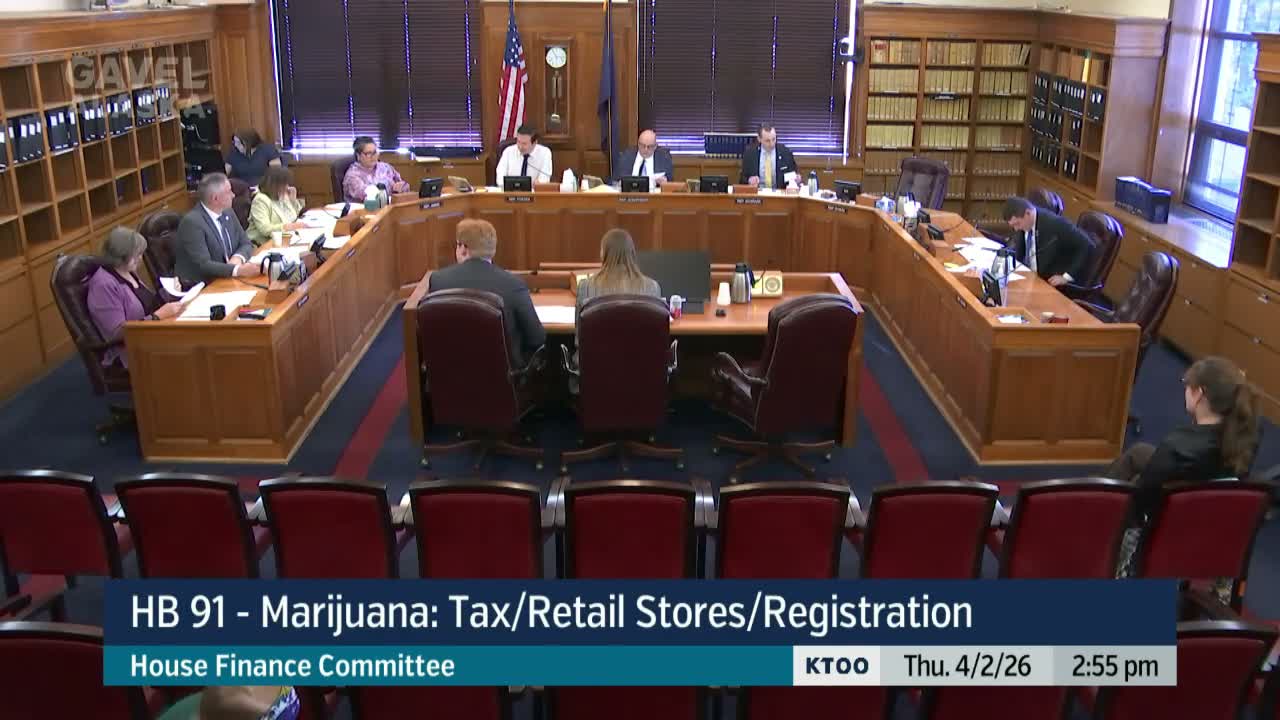
House Finance rejects amendment narrowing youth‑service language, advances marijuana tax bill out of committee 6–2
Loading...
Summary
Committee debated Amendment 7 to HB91 to designate a portion of MET funds for 'after‑school' programs; after debate and a conceptual change to 'youth services or after school' the amendment failed 2–8 on roll call. HB91 was later moved out of committee as amended on a 6–2 roll call and will proceed with attached recommendations and fiscal note.
The Alaska House Finance Committee returned from a brief at ease to continue work on HB91, a marijuana tax bill, and spent the afternoon debating Amendment 7, which would have specified that 50% of the MET fund allocation directed toward youth services be restricted to an "after school grant program." Representative Yvette Galvin, the amendment's sponsor, cited data from the Alaska Children's Trust that, she said, showed after‑school participation reduces youth marijuana use by 39 percent.
Supporters of the amendment argued the change would restore an original statutory intent to target after‑school activities; opponents warned the narrower language could exclude other current youth services such as behavioral‑health programs, weekend or summer offerings and other prevention work. After a conceptual change to language that would read "youth services or after school," the committee voted on the amendment. On a roll call the amendment as amended failed, 2 yea to 8 nay.
Bill advancement and committee vote
After disposing of Amendment 8 (not offered) and withdrawing Amendment 2, the committee considered whether to report HB91 out of committee. A motion to move HB91 out of committee "as amended with individual recommendations and attached fiscal note" carried on a roll call vote of 6 yes to 2 no. Committee members recorded in the roll call for the motion included: Galvin (yes); Jimmy (yes); Hannon (yes); Stout (no); Thomas (no); Josephson (yes); Shrogy (yes); Foster (yes).
What it means
The failed Amendment 7 highlights tension about whether designated tax revenues should be narrowly defined in statute (to assure funds go to a particular program) or left broad to preserve flexibility for different types of youth services. Proponents sought a statutory guarantee that MET funds would support after‑school programs; opponents argued the amendment risked unintentionally excluding some current grantees. The committee chose to advance HB91 to the next step in the process with its recommendation and fiscal note attached.
Next steps
HB91 will move forward with the committee report and attached fiscal note; committee members and staff said they may continue follow‑up on program definitions and fiscal impacts as the bill advances through the session.