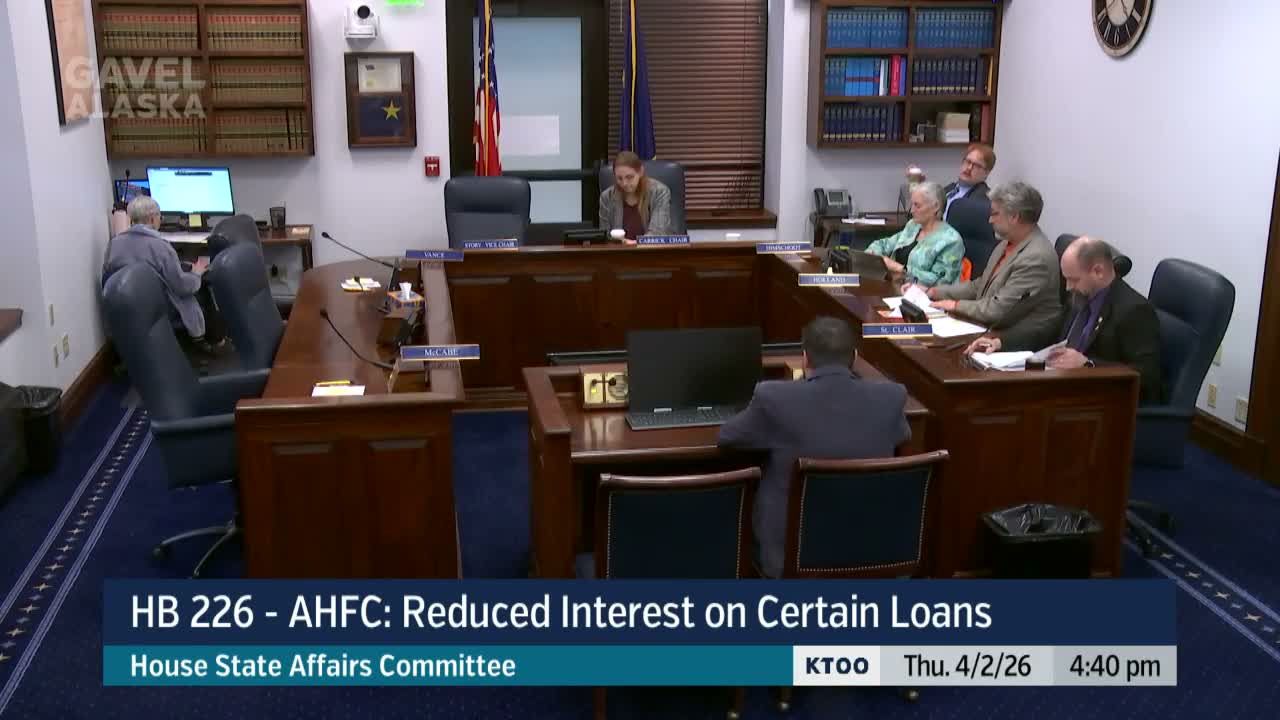
Committee hears bill to raise AHFC rural loan cap to $400,000 to reflect soaring construction costs
Loading...
Summary
Rep. Foster's staff introduced HB 226 to lift the AHFC rural loan program cap from $250,000 (set in 2002) to $400,000. Witnesses from rural Alaska described extreme building costs, and members probed whether the cap should be higher or indexed to inflation and discussed the dividend trade-off for AHFC.
Representative Foster's staff introduced House Bill 226, which would raise the Alaska Housing Finance Corporation's rural loan cap from $250,000 (the 2002 level) to $400,000, citing substantial increases in construction costs in rural communities.
Paula Bull, staff to Representative Foster, summarized the measure as "a bill that has no words and changes one number," explaining the 400,000 figure was a conservative adjustment toward today's costs. Melanie Behnke, president of the regional tribal consortium in the Bering Strait region and a Housing Alaskans board member, testified in support and provided region-specific construction-cost estimates: she said a one-bedroom build in parts of her region can be on the order of $691,000 and a typical three-bedroom home in Nome is estimated at $862,000.
Behnke said the AHFC rural rate currently applies only to the first $250,000 of a loan, with any excess receiving a blended rate, and that that policy has not been adjusted for inflation. Committee members raised why the cap was set at $400,000 rather than a higher, inflation-indexed level. An AHFC-related discussion noted that increasing the cap would reduce the dividend AHFC pays to the general fund (a revenue reduction), even though AHFC is a self-supporting public corporation.
Members and witnesses discussed whether an automatic inflation-adjustment mechanism might be appropriate; the sponsor said she would be open to such language in a future committee substitute. The committee did not vote; Chair Kerrick set the bill aside for further hearings next week.