Sponsor urges creation of a "Welcoming Alaska" office to coordinate newcomer services
Loading...
Summary
Representative Genevieve Mina introduced HB 188 to create a Welcoming Alaska office in the Department of Labor and Workforce Development to coordinate refugee and newcomer services, establish a nine-member advisory committee and a welcoming center (subject to appropriation); invited witnesses and DOLWD staff said the change responds to recent federal policy shifts and could improve workforce integration.
Representative Genevieve Mina introduced House Bill 188 on April 2, 2026, proposing a Welcoming Alaska office inside the Department of Labor and Workforce Development to coordinate services for newcomers and refugees across state agencies and community partners. Mina said the office would replace the existing Office of Citizenship Assistance and provide a statewide framework to retain and integrate new Alaskans into the workforce.
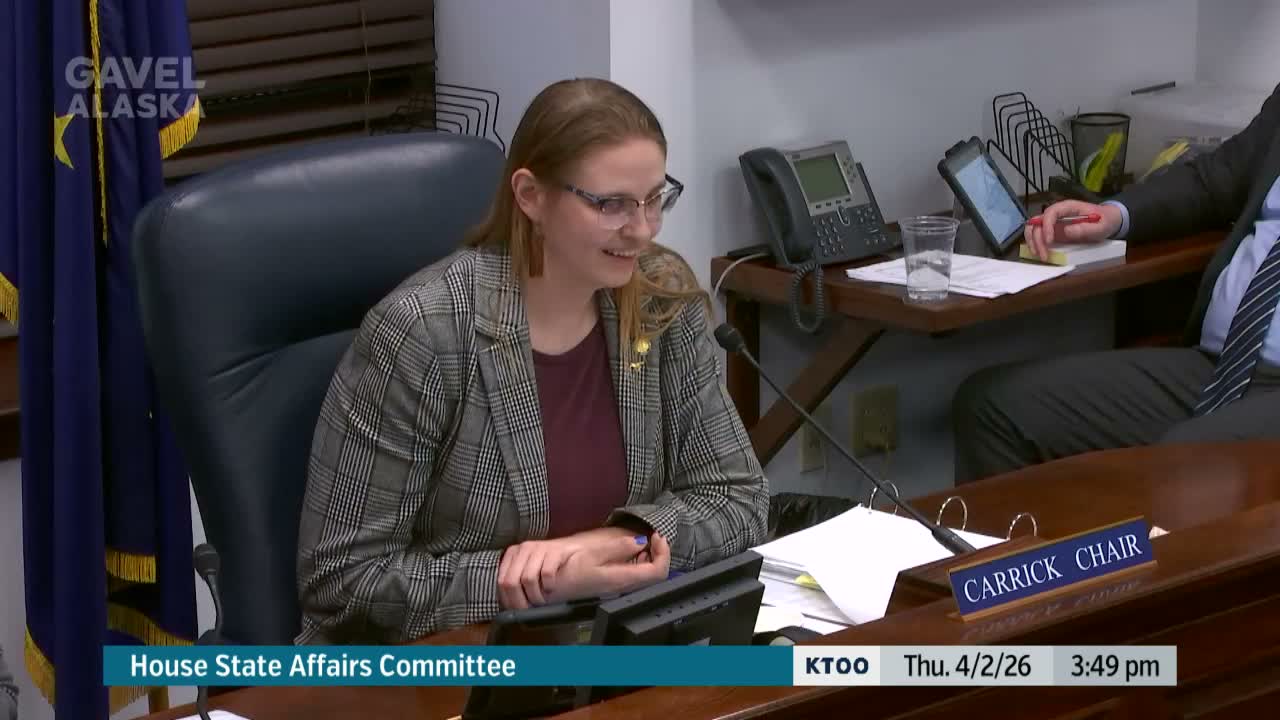
Mina told the House State Affairs Committee the bill would create a nine-member advisory committee (including two nonvoting legislative members and seven governor-appointed voting members representing nonprofits, tribes, education, business, legal services, criminal justice and the public), authorize a Welcoming Alaska Center subject to appropriation, and charge the office with employment supports, barrier research, stakeholder coordination and performance tracking. The bill includes a statutory report due by July 1, 2027, and an effective date of July 1, 2026, in its current draft.
Supporters who testified said a permanent state office would formalize responsibilities and reduce duplication. Sarah Shinkfield, Alaska state refugee coordinator for Catholic Social Services, said the federally funded refugee resettlement program has long been administered through nonprofit partners and that Alaska has welcomed "just under 3,000 refugees from 54 different countries" since 2003. Shinkfield said nearly 1,200 individuals are currently being served and that a state-administered structure would help comply with recent Office of Refugee Resettlement policy changes while aligning services with workforce, health and education systems.
Zoria Oponosevich, executive director of New Chance Ukraine Relief, described ad-hoc work in 2022 to help Ukrainians who arrived through Uniting for Ukraine and said those efforts highlighted the need for a centralized government contact to streamline DMV, school enrollment and health-screening processes. Mike Zimmer of World Education Services described best practices from other states, saying a number of states have formal "offices of new Americans" that prioritize workforce integration and statutory liaisons across agencies.
Adam Weinert, special assistant to the commissioner at DOLWD, told the committee the Office of Citizenship Assistance has operated out of the Midtown Job Center in Anchorage, providing walk-in employment assistance and outreach and that department staff have been coordinating a timeline for a transition of federal refugee-support program administration to the state beginning in 2027.
Committee members asked about the office's scope, including whether it would primarily serve individuals or employers, its role in supporting teachers and seasonal workers on various visa categories, and how the office would work with local school districts and large projects. Mina and Weinert said the office is intended to centralize coordination and stakeholder engagement; Weinert emphasized that immigration legal questions must be handled by immigration attorneys and that the department provides employer referrals.
Public testimony included nonprofit, education and business leaders who said the office could help retain workers, boost entrepreneurship among foreign-born Alaskans and reduce duplicated effort among service providers. A Kenai caller expressed fiscal skepticism and urged careful review of the fiscal note. Chair Kerrick closed public testimony and said the committee will continue the bill next week.
The committee did not take a formal vote on HB 188; members will return to the measure at a later hearing for additional questions and potential committee substitutes.