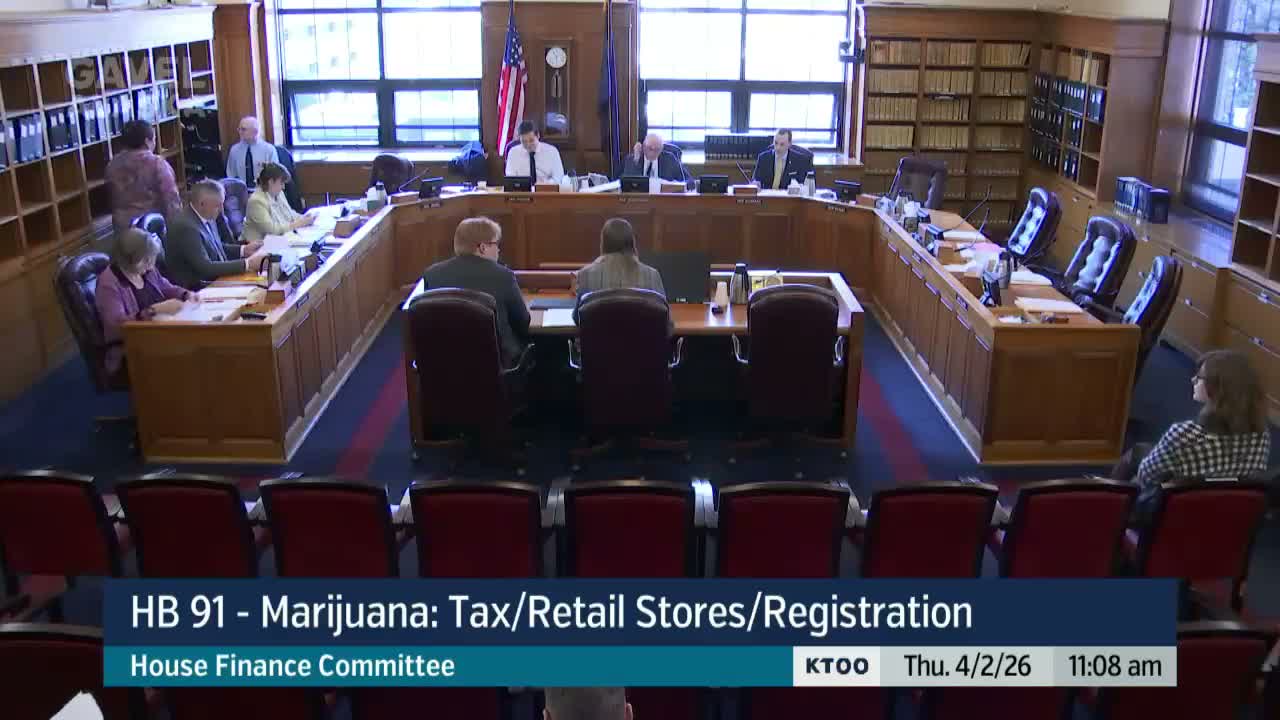
House Finance begins marathon on marijuana tax reform; committee adopts technical cleanup and delays remaining amendments
Loading...
Summary
The committee reviewed House Bill 91’s tax‑structure proposal (transition from a $50/oz excise to a $12.50 wholesale tax and eventual 6% sales tax), debated multiple amendments on tagging, collection facilities and revenue designation, adopted an 18‑month transition amendment, and deferred remaining amendment work to the afternoon session.
Representative Ashley Kerrick summarized House Bill 91 as a phased change to Alaska’s marijuana tax structure: a move from the current $50 per ounce excise to a $12.50 per ounce wholesale tax, ultimately replaced by a retail sales tax (6% in the bill as drafted).
The committee considered eight amendments. Amendment 1 (Rep. Schrage) removed statutory plant‑by‑plant tagging (delegated to regulation), corrected drafting for a 25% revenue designation and deleted a requirement to establish tax collection facilities in each judicial district; it also delayed effective dates to create an 18‑month transition. Members debated fiscal‑note estimates for new Revenue collection centers and industry concerns about quarterly vs. monthly remittance and the safety risks of carrying larger quarterly cash amounts. Amendment 1 passed on an 8‑2 roll call.
Subsequent amendments sought to restore the 25% designation to UGF, delete the sales tax portion, or change the ultimate retail sales tax rate. Committee members were sharply divided: some prioritized revenue stability for programs the marijuana fund supports; others argued lower retail rates were needed to keep legal businesses competitive with the black market and avoid pushing consumers to untaxed sellers.
A conceptual amendment to set the retail rate at 7% (from the underlying 6%) was proposed and discussed; another amendment attempted to reduce a proposed retail rate to 3%. After extended debate and multiple conceptual changes, two tax‑rate amendments — including a 7% proposal — failed on roll calls (Amendment 4 failed 4‑6; a later amendment failed 2‑8). Committee leadership recessed the remaining amendment work until the afternoon session and then adjourned for lunch to resume under "bills previously heard" at 1:30 PM.
The committee’s debate mixed policy tradeoffs: protecting program revenue streams that were promised when legalization passed, avoiding negative impacts on an Alaska industry with high cost structure, and minimizing practical burdens (security and banking) associated with cash tax collection. Several members urged federal banking reform as the longer‑term fix to cash‑handling risks.