Rep. Bill Elam's bill to limit addictive social‑media design for minors gets first hearing
Loading...
Summary
At a Judiciary Committee hearing, Rep. Bill Elam presented HB 318 to require safer default settings, restrict addictive design features, limit targeted advertising to minors and strengthen parental controls; members pressed staff on age verification, definitions of "reasonably necessary" data and enforcement mechanisms.
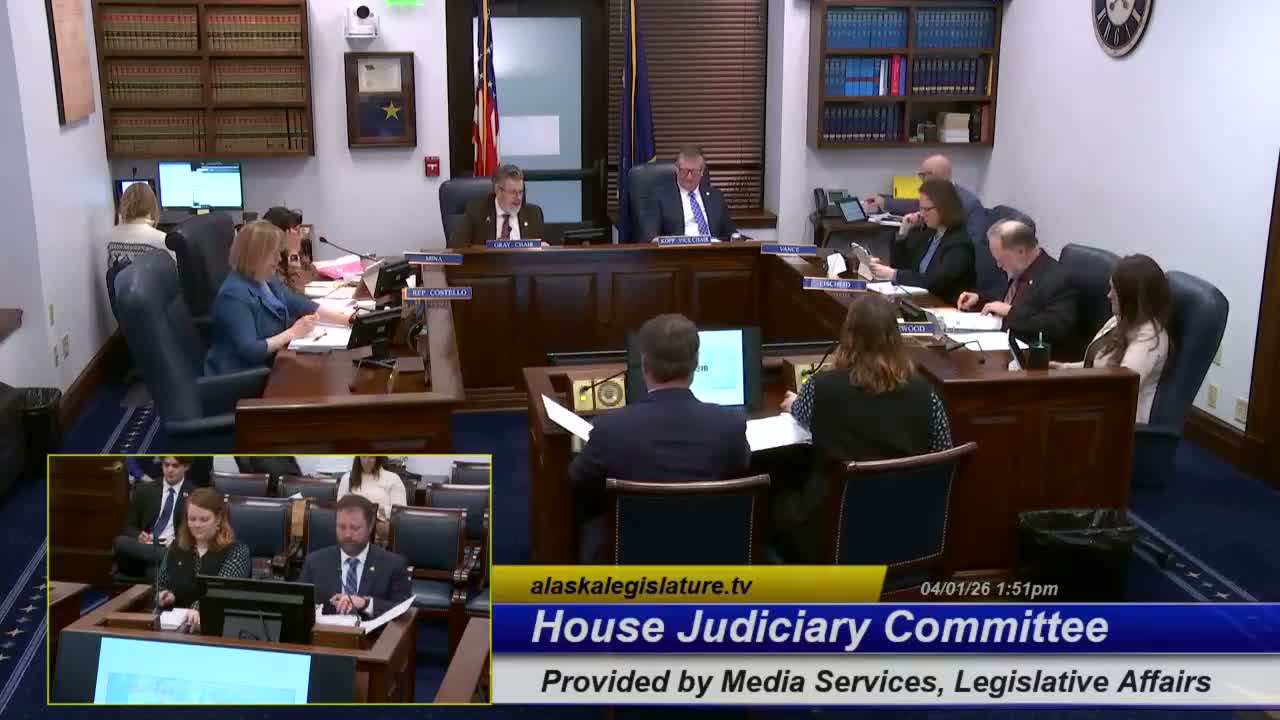
Juneau — Representative Bill Elam opened the first hearing on HB 318 on April 1, describing the bill as a narrowly tailored approach to regulate platform design and data practices that contribute to harms for minors.
"This bill puts safe default, safer defaults in place for minors before harms occur," Kendra Broussard, staff to Representative Elam, told the committee during a slide presentation. Broussard described provisions that would require platforms to provide a non‑addictive content delivery system for known minors, prohibit coercive or deceptive design features (infinite scroll, autoplay), limit targeted advertising to minors, default accounts to private for minors and require verifiable parental consent for some features.
Committee members focused on several recurring technical issues. Representative Cough asked for a clearer statutory definition of what data is "reasonably necessary" to provide a social media service to a known minor; Representative Mina and others pressed on the practical challenges of age verification and the privacy tradeoffs involved. Broussard and Rep. Elam said the bill tasks the attorney general with developing workable age-assurance approaches and pointed to enforcement through Alaska's consumer‑protection framework and the attorney general's civil authority.
Invited witnesses testified in support. Ryan Hunseth, president of the Kenai Peninsula Borough Assembly and board member with the Boys & Girls Clubs, praised the bill's focus on design rather than content. "These are multibillion‑dollar businesses built on capturing and selling our kids' attention," he said. Dr. Keith Hamilton, president of Alaska Christian College, and several community members described academic and local observations about sleep disruption, attention problems and other harms they associate with heavy social media use.
Committee members and the sponsor discussed possible amendments including clearer definitions around "reasonably necessary" data retention, safe-harbor language for good‑faith compliance by smaller platforms, and whether protections should vary by platform size. The sponsor indicated willingness to work with legal counsel and the attorney general to refine enforcement and verification details.
The committee took the invited testimony and set HB 318 aside to be returned for further drafting and possible amendment. No final vote was taken at the April 1 hearing.