Get Full Government Meeting Transcripts, Videos, & Alerts Forever!
Get email alerts on the Consent Decree Modification topic
No spam. Unsubscribe anytime.
Fort Smith board approves modification to federal consent decree, extending deadline and clearing financing path
Summary
The Fort Smith Board approved a negotiated modification of its wastewater consent decree that extends the compliance deadline, allows additional borrowing and aims to put the city on a path to durable compliance while leaving future rate choices to the board.
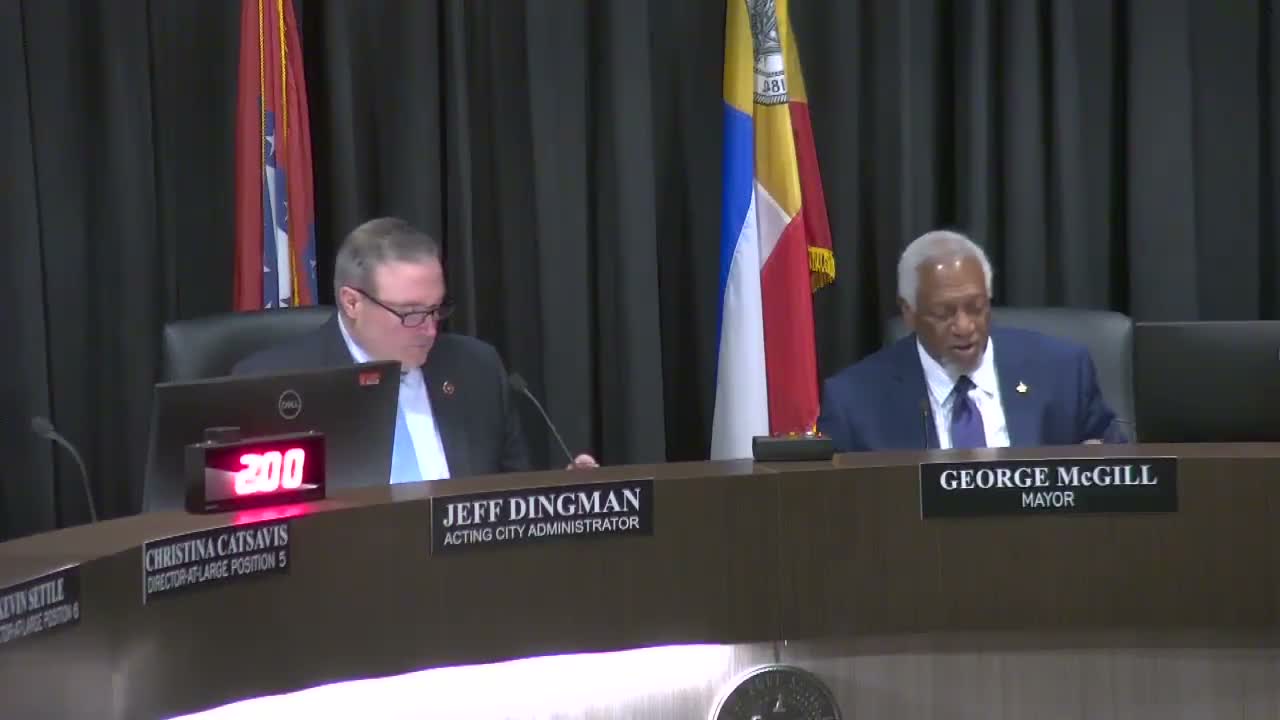
The Fort Smith Board of Directors voted 6–0 on March 3 to approve a negotiated modification to the city’s federal consent decree that extends the time for required wastewater improvements and clarifies financing steps to complete the work.
City attorney Paul Kalamida, who addressed the board remotely, said the modification would extend the implementation window by about 11½ years — moving the compliance target to June 30, 2038 — and provide the city a “fresh start” to pursue durable compliance while continuing coordination with the Arkansas Department of Environmental Quality, the EPA and the U.S. Department of Justice.
The board heard staff describe a financial plan that contemplates reallocating existing local sales tax revenue and issuing up to $385 million in sales‑and‑use‑tax bonds for wastewater system improvements; the city has already issued $100 million of those bonds and authorized more than $50 million in construction contracts. Resident Levon Morton told the board he reviewed prior proposals and believes the city has capacity to issue new bonds as older debt matures.
Resident Crystal Cadelli urged caution, telling the board the sales‑tax reallocation will not cover the total remaining cost and estimated “at least a $300,000,000 shortfall” even under optimistic assumptions. Board members and staff acknowledged funding risks but emphasized that the modification gives the city more time and leverage to complete the capital program.
Administrator Dingman and financial staff told directors the modification obligates the city to implement a financial management plan and to obtain additional financing as needed beginning in 2031, but does not contain a specific covenant to raise sewer rates beyond the increases already adopted through 2030. Director Neil Martin asked explicitly whether the plan requires post‑2030 rate increases; staff answered it does not mandate a particular percentage increase after 2030.
Board members asked about potential stipulated penalties; Paul Kalamida said penalties remain negotiable and that the agencies reviewing the modification have been briefed and will consider the city’s efforts, including force‑majeure events such as floods and the pandemic, when assessing compliance and penalties.
The board approved the resolution on a recorded roll call of six in favor and none opposed. The board’s action authorizes the administrator to execute the consent‑decree modification and sends the document to the state attorney general, ADEQ, EPA and U.S. DOJ for their required signoffs.
What’s next: the executed modification will be submitted to the state and federal agencies for final review and signature; the board will oversee and approve the city’s financial management plan and future financing steps as the program moves into its next construction phases.