Get Full Government Meeting Transcripts, Videos, & Alerts Forever!
Get email alerts on the Land Use Zoning topic
No spam. Unsubscribe anytime.
Monterey County opens public process to draft battery‑storage zoning and safety rules
Summary
Monterey County staff launched a community kickoff to gather input on a proposed ordinance regulating battery energy storage systems, citing state codes, NFPA 855, SB 38 emergency‑action requirements and the California Energy Commission's permitting role for very large projects. Staff will form a steering committee and circulate a draft ordinance for public review.
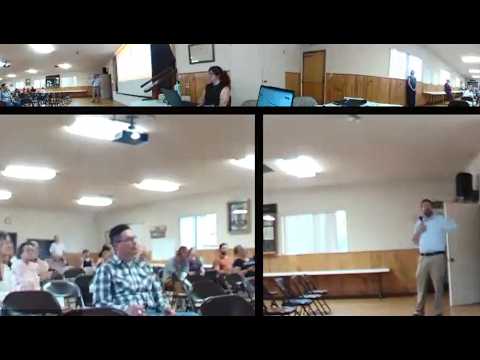
Greg Spencer, director of Housing & Community Development for Monterey County, opened a public kickoff meeting on April 4, 2026, to begin drafting zoning and safety regulations for battery energy storage systems and to solicit community input.
County staff said the effort follows recent incidents and is intended to balance the recognized benefits of energy storage with protections for public health and safety. "This really is a kickoff…we're going to get your feedback," Spencer said, framing the evening as the first of multiple meetings and surveys to shape proposed rules.
Staff reviewed the regulatory framework that will guide local rules: the California Building Code and locally adopted fire codes, the National Fire Protection Association standard NFPA 855, and Senate Bill 38 (SB 38), which requires an emergency action plan for systems over 1 megawatt‑hour. The county also noted the California Energy Commission (CEC) can certify projects capable of storing 200 megawatt‑hours or more, which can substitute for local permits on very large facilities.
County planners said the local ordinance will clarify which projects require discretionary review, what ministerial criteria might suffice, and what performance standards will be required in permit applications. Options discussed included limiting the ordinance to front‑of‑meter (utility‑scale) systems, applying it to all systems above a megawatt‑hour threshold, or adopting a hybrid approach that varies by size and location. Spencer said staff will consider setbacks, monitoring requirements, decommissioning plans and requiring the "best available technology" and accurate emergency action plans.
On coordination and oversight, staff said emergency action plans must include response procedures for equipment malfunction, measures to protect nearby residents and instructions for notification and communication with local emergency management and fire agencies. The county plans to require operators to provide multi‑scenario plume modeling and to fund outside technical reviews when necessary.
County staff outlined the next steps: form a steering committee with fewer than 10 members (including county staff, a fire marshal, the agricultural commissioner and community representatives), secure a technical consultant who has worked on model ordinances, prepare a draft ordinance, publish it for public comment, and proceed through any required CEQA review, planning commission hearings and final board action. The county also noted that coastal‑zone regulations would require certification by the California Coastal Commission before applying in those areas.
Staff emphasized that some large projects could be routed to the CEC under state law and that the county's ordinance will therefore focus on the projects it can reasonably regulate. The public process will include additional community meetings, surveys and opportunities for written comment; staff said submitted comments and Slido responses will be recorded and carried into drafting.