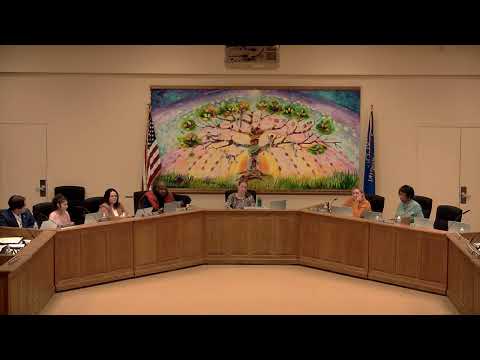
Student interns tell Milwaukee School District committee the internships build workplace skills and access
Loading...
Summary
Student interns at a Milwaukee School District Committee meeting described hands‑on work in community centers and district offices, while the district’s contract compliance manager outlined goals to expand student engagement and workforce pathways for high‑school students.
Students who have taken part in Milwaukee Public Schools’ internship and workforce programs told the Committee on Accountability, Finance and Personnel that the placements give them practical skills, exposure to careers and support their future plans.
"Every day I go, I get a chance to communicate with my community, and I love that," said Deandre Shelton, a junior at Bayview High School who interns at Silver Spring Neighborhood Center. "It builds my character and how I should go about the real world." Jaime Cohen (sic), the manager of Contract Compliance Services, told the committee the office integrates student engagement requirements into contracts and that in fiscal 25 the program supported student employment and career‑education hours across district contracts.
The committee heard a presentation from Matt Chiesen of the Office of Accountability and Efficiency, who introduced Jaquina Cohen, manager of Contract Compliance Services, and said the office aims to create sustainable internships that move students from observation to active contribution. Cohen described three program pillars: HUB and underrepresented‑business participation, the Communities in Need (COIN) workforce preference program, and student engagement requirements that assign employment or educational hours to vendors’ contracts.
Four students — Deandre Shelton, Evelyn, Xandria and student representative Mateo de la Cruz — each described how they learned about opportunities (through community organizations, school flyers and guidance offices), how transportation factored into participation, and what they gained from the experience. "I got to learn a lot about technology," said Mateo de la Cruz, who works in the district’s central office technology department and said the internship helped him advocate for student needs.
Committee members pressed administration on access and equity. Director Zombor asked how students find opportunities and whether transportation is a barrier; Cohen said recruitment runs through counselors, an internal list of high‑school contacts and community partners, and that the program can support up to 300 students on a first‑come, first‑served basis. She said the district tries to place internships on bus lines but currently does not provide bus passes; the office said it can look into bus passes as an accommodation.
Cohen also noted a focus on trades through the COIN program and said the district is considering policy revisions to create clearer pathways for students interested in skilled trades, including outreach with the state Department of Workforce Development and on‑site visits by contractors to schools.
The committee praised the student presentations and thanked the Office of Accountability and Efficiency and its partners. The presentation concluded as an informational item; no action was required.