Get Full Government Meeting Transcripts, Videos, & Alerts Forever!
Get email alerts on the Emergency Alerts topic
No spam. Unsubscribe anytime.
Brown County approves HQV Systems for countywide emergency alert system; commissioners weigh cost and subscriber uncertainty
Summary
After demonstrations, staff recommended HQV Systems for the countywide emergency alert and warning system; commissioners approved the recommendation and discussed features, unit pricing, subscriber counts and integration with FEMA's IPAWS. Staff said the vendor could deploy within days and that some budget variance would be covered by emergency management equipment funds.
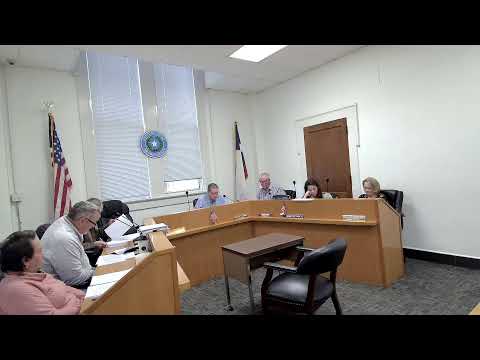
Brown County commissioners approved staff's recommendation to contract with HQV Systems for a countywide emergency message alert and warning platform after demonstrations of multiple vendors.
An agency official said the previous vendor suffered a cyber incident and staff evaluated three providers (text.gov, HQV Systems and Everbridge). The official recommended HQV Systems, highlighting a subscriber option that allows temporary registrations for visitors, platform integrations that could support elections (for curbside voting notifications), and a 'threat sense' feature for situational awareness. "We think HQV systems would be the best provider for the service," the official said.
Staff presented a cost comparison pulled from the feature matrix: text.gov was listed at roughly $18,000 for a three‑year term with a setup fee; HQV Systems was shown at $13,500 for a three‑year term or $12,750 for a five‑year term (figures as presented); Everbridge was listed at about $10,407.75 for a three‑year term. The official noted the budget difference for a five‑year HQV term could be about $1,211 more than budgeted but said funds were expected to be available in emergency management equipment budgets to cover the variance.
Staff explained unit pricing and usage uncertainty: the vendor quote included 150,000 message units per year (each message sent to a subscriber counts as a unit). Because the previous vendor's system went offline after a cyber breach, historical message counts were not accessible. Staff said getting public signups can be challenging; one official said, "I think if we could get 5,000 registrants, we would be doing really good." Pricing examples in the presentation suggested per‑registrant and scale‑dependent costs starting in the low hundreds for initial blocks and rising with larger subscriber counts.
A commissioner moved to approve the HQV Systems recommendation and another seconded; the chair called for a raise‑hand approval and the motion passed as recorded in the transcript. Staff said the vendor committed to deployment in "no longer than two weeks," and possibly within a few days.
Why it matters: A functioning alerting platform affects public safety communications countywide, supports integration with other county systems (including elections), and involves recurring costs whose scale depends on subscriber uptake and message volume.
Details and next steps: Staff will finalize contracting steps, coordinate IPAWS integration (FEMA's national alert gateway), and prepare public instructions for registration. The transcript records discussion about units, cost ranges, and the need to monitor actual usage to manage future costs.