Get Full Government Meeting Transcripts, Videos, & Alerts Forever!
Get email alerts on the Zoning Setbacks topic
No spam. Unsubscribe anytime.
Baker work session focuses on setbacks, eaves and whether to adopt newer building-code fire protections
Summary
Residents and council members at a City of Baker work session debated minimum separation between newly built houses after neighbors flagged Alabama Street projects as too close; officials asked staff to check whether adopting the latest International Building Code (and firewall requirements for eave overhangs) is needed.
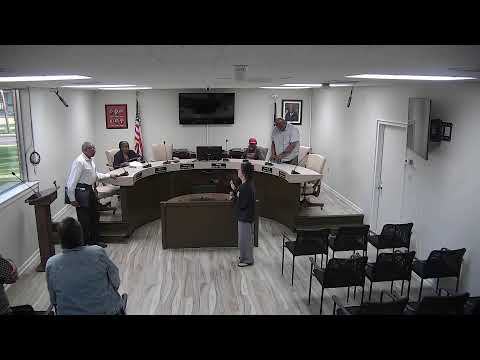
At a City of Baker work session, council members and residents examined whether newly built single-family houses are being placed too close together and whether the city should adopt newer building-code provisions to require firewalls when eaves or soffits encroach setback lines.
The Chair opened the discussion saying the concern stemmed from what she had observed on Alabama Street where "they built them 4, I think it's about 4 or 5 homes," and that the group should consider changing setbacks going forward. The Chair added that she worried a fire could spread between tightly spaced roofs: "If a fire comes, then that house gonna burn. It's gonna burn." The Chair said she would support requiring "firewalls put in between the properties when they're building the homes" as a safety measure.
Residents and council members debated numeric standards. One participant proposed a 10-foot clear distance from eave to eave as a clear objective; the Chair summarized the practical meaning of that target as "5 feet from the property line and then 5 feet from that property line," which yields about 10 feet between exterior walls. Several others said 8 to 10 feet would be reasonable; some argued the concern was partly aesthetic, that tightly spaced houses can look "cheaper," while others noted market preferences for smaller lots.
Rob Robinson and a participant identified as Chris reported field measurements of recently built houses on Alabama Street, saying the wall-to-wall distance was roughly 10 to 11 feet while eave/soffit overhangs could reduce the clearance. Chris: "Like, about 10 foot 3, 10 foot 3... Almost 11 feet." The Chief responded that whether a firewall is required "depends on code" and that soffits that extend into a required 5-foot setback can trigger firewall requirements: "If it goes over, that's when you're required to have the firewall."
On building-code adoption, participants noted the city appears to be enforcing the 2022 International Building Code rather than a 2024 update. The Chief advised staff to review the city doption status and inspector practice and said the city could address firewall requirements by ensuring the currently adopted model code is enforced or by adopting a newer code: "I think the city should look at their building code." The Chair asked staff to "check with Don" and for the building official to review the house plans so the council could decide whether to pursue an ordinance change.
There was no formal vote to change setbacks or adopt new code at the session. A committee member moved to adjourn, Rob Robinson seconded, a voice vote returned "Aye," and the meeting ended. The primary next step recorded in the discussion was for staff to confirm which version of the International Building Code the city enforces and to review plan details to determine whether firewall requirements already apply or whether a code adoption or ordinance change is required.