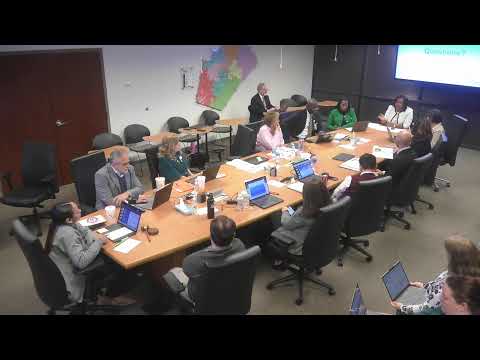
Wake County previews 2026 summer learning after reviewing 2025 Read to Achieve outcomes
Loading...
Summary
District staff reported Read to Achieve, Power Scholars and credit/objective recovery outcomes from summer 2025 and outlined 2026 program plans, noting funding limits for some CTE offerings and a semifinalist honor for the Read to Achieve camp.
District staff presented a recap of summer learning work in 2025 and the district’s plans for 2026, focusing on Read to Achieve camps, Power Scholars partnerships with the YMCA, credit recovery and objective recovery options, and career-technical offerings.
Staff said the 2025 Read to Achieve effort included 63 host sites and served more than 2,500 students; 4,314 students were invited and the district conducted walkthroughs to assess instructional quality. Survey responses indicated roughly 90% of families found camp beneficial and 89% considered camp effective at supporting reading and literacy growth. Staff also reported average pre-to-post camp composite growth of about 4.3 points and that, among a pulled cohort, 19% of third graders met the 725 Lexile benchmark after attending camp.
Power Scholars (a YMCA partnership) was described as a longer, enrichment-rich five-week option for K–5 that combines literacy and math with weekly field trips; staff said 70% of invited students (70% of 330 invited) attended and that the district plans to expand the program. For secondary students, staff reviewed summer credit recovery operations: the district offered on-site, blended and virtual options, enrolling more than 2,400 students and delivering roughly 3,600 course attempts with about a 76% completion/pass rate.
District staff emphasized objective recovery — in-class, real-time remediation of specific standards or unit objectives — as a prevention strategy. From August to January 2026 the district reported about 5,600 students participated in objective recovery with 23,000 active enrollments and over 18,000 objectives successfully recovered.
Staff also reviewed CTE summer offerings (Career Accelerator, districtC) and ESY (extended school year) special education services (about 200 students served). Board members asked how programs are funded; staff said Read to Achieve camps are funded by state allocations PRC 85 and PRC 16, some CTE programs had used ESSER dollars that have now sunset, and transportation and staffing remain major budget pressures.
Board members asked for longitudinal tracking to see whether gains from summer programs persist during the school year, encouraged exploring business partnerships and sustainability for CTE offerings, and requested staff return with follow-up data on post-camp academic performance and participation barriers.