Appeals court weighs whether substituted DNA testimony violated Pinney————confrontation rights
Loading...
Summary
At oral argument, defense counsel said admitting DNA through a substitute analyst deprived Frederick Pinney of his confrontation rights and that non‑DNA evidence pointed to a third‑party suspect; the Commonwealth said timing, forensic and witness evidence still made for an "overwhelming" case.
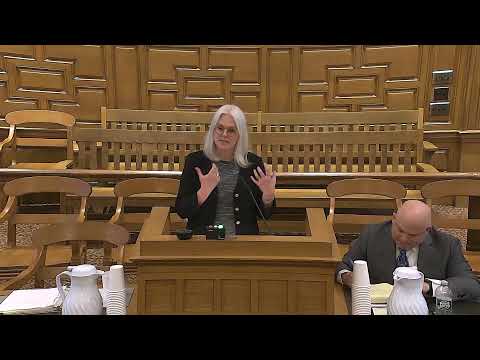
Luke Rosille, arguing for appellant Frederick Pinney, told the Massachusetts Appeals Court on April 3 that the trial court admitted DNA evidence through a substitute analyst in violation of the Sixth Amendment confrontation clause and that, without that testimony, the record would not be "overwhelming" against Mr. Pinney.
"I think the point here is we all agree Mr. Pinney's confrontation rights were violated by the testimony that was used to bring his DNA in this trial," Rosille said, urging the court to assess whether that error was harmless beyond a reasonable doubt.
Rosille focused on what he described as strong third‑party‑culprit evidence pointing to Chris Podgurski, including DNA recovered under the victim's fingernails and prior incidents of strangulation, and urged that the jury's verdict could have been swayed by the improperly admitted DNA. He asked the panel to take a holistic view of the trial record, including cell‑tower data and contemporaneous messages, when applying the Chapman harmless‑error standard.
Assistant District Attorney William Joyce, representing the Commonwealth, acknowledged the DNA evidence helped the prosecution but countered that other record evidence — a distraught 911 call, corroborating witness testimony about movements and timing, medical‑examiner testimony about rigor mortis, and the general pattern of evidence — would still allow a reasonable jury to convict. "Even without any of the DNA evidence," Joyce said, "this is still a very good case for the Commonwealth." He also urged the court, if it remands, to resolve ancillary suppression questions that could arise at retrial.
The three‑judge panel repeatedly questioned both sides about how to apply the harmless‑error test here: whether the court should remove the tainted testimony and inspect what remains or weigh the challenged evidence's impact on the jury as part of a totality analysis. The defense cited Chapman and related precedents distinguishing situations where the admission of key forensic testimony was central to conviction. The Commonwealth cited cases it said showed stronger non‑DNA records than the Pinney trial.
Both sides also touched on Fourth Amendment issues arising from the taking of buccal swabs and on practical retrial questions: Rosille argued police misconduct and contamination concerns made suppression and exclusion issues significant; the Commonwealth argued the later swab and other empirical points reduce the force of that contention.
The panel asked follow‑up questions about whether the court can, on appeal, rely on witness credibility assessments and how to weigh conflicting inferences when two suspects are involved. At the close of argument, the court signaled it would take the briefs and return to conference before issuing an opinion.
The court did not issue a decision from the bench; the case will be resolved by written opinion.