Get Full Government Meeting Transcripts, Videos, & Alerts Forever!
Get email alerts on the Budget topic
No spam. Unsubscribe anytime.
Measure S oversight committee reviews FY 2026–27 budget, directs quick pool fixes and an engineering study
Summary
The Measure S Oversight Committee reviewed the proposed FY 2026–27 budget on March 10, 2026, heard department requests for fire, police, streets and the municipal pool, and gave staff direction to install window tinting and begin an engineering study to address persistent pool condensation.
The Measure S Oversight Committee on March 10 reviewed the proposed fiscal year 2026–27 budget for the city’s voter‑approved 1% Measure S sales tax and gave staff direction to pursue near‑term and longer‑term fixes for persistent condensation at the municipal pool.
City manager (speaker 4) told the committee Measure S generates approximately $2.33 million a year in sales‑tax revenue and that, with a projected reimbursement from the fire district, total Measure S‑related receipts this year would be a little over $2.8 million. Staff presented estimated total expenditures a little over $3.1 million and several fund‑balance estimates: an estimated year‑end balance of about $207,965, a fiscally conservative forecast of roughly $271,000 under routine savings assumptions, and a warning that spending every dollar in the budget would reduce reserves to about $129,007.81. Staff cautioned that without a modest ongoing savings rate the Measure S balance could turn negative within roughly three years under current spending assumptions.
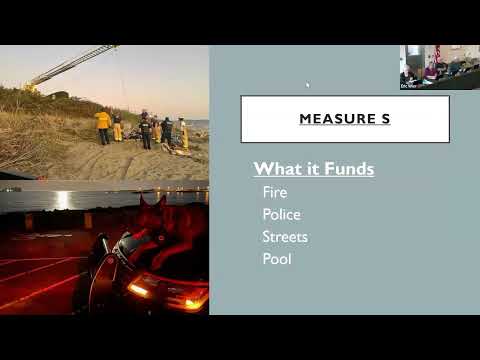
Why it matters: Measure S funds are earmarked to augment services in four community priorities — fire, police, streets and the pool — and the committee’s recommendations will go to the city council as the council finalizes the city’s overall budget.
What staff presented
City manager (speaker 4) and staff walked the committee through department line items. Key Measure S allocations discussed included: a total fire department cost line approaching $1 million before district reimbursements (with a roughly $509,000 net city cost after the district share), police department allocations around $645,000, streets spending in the $800,000 range focused on preservation and capital projects, and an operating allocation of about $345,000 for the pool. Staff said the city has budgeted $98,000 to the apparatus‑replacement fund this year toward future engine or ladder‑truck needs and is continuing a multi‑year plan for turnout gear and SCBA replacements.
Fire and staffing initiatives
The fire chief (speaker 5) described a proposed firefighter intern partnership with College of the Redwoods that would place recruits in station shifts so they can complete on‑station training required for state certification; staff said the program could expand the recruit pipeline at lower cost than hiring full‑time firefighters. Staff also proposed modest increases in volunteer stipends (a placeholder of roughly 10 percent) and purchases such as pagers and radios to improve volunteer response and retention.
Police and accountability items
On the public‑safety side, staff described Measure S funding for three additional officers (an estimated $448,000), conversion of a patrol officer to a detective, funding for body‑worn cameras and Tasers (about $47,002.50), dash cameras and a modest allocation for a cell‑phone forensic analyzer (about $6,000). Ongoing canine expenses and vehicle replacement plans were also discussed.
Streets and capital projects
Staff described how Measure S has been used as match funding for larger street projects and to target collector streets for preservation work. Staff noted smaller annual repair budgets (about $100,000 for minor repairs and $50,000 for striping) plus larger multi‑block projects funded in combination with grants.
Pool condensation: near‑term tinting and an engineering study
Committee discussion focused at length on a persistent condensation problem at the city pool that staff says is driven by a combination of high interior humidity and an existing metal roof with insufficient insulation and air space. Staff presented two near‑term and longer‑term options: a vendor quote for window tinting of about $14,000–$15,000 to reduce solar heat gain this summer, and an engineering design study (staff estimated design costs could range, with a placeholder of $15,000–$30,000 depending on final scope) to identify a permanent solution such as additional insulation, a false ceiling or modified ventilation.
Committee members directed staff by consensus to return with a resolution and cost estimates: place roughly $15,000 in this fiscal year for window tinting (staff cited a vendor quote near $14,000) and set aside a placeholder of about $15,000 toward the engineering study so work can begin on the design and procurement. Staff said they have engaged an engineering consultant (AECOM) but were awaiting firm design quotes to present at the next meeting.
Committee member (speaker 3) said, “I’m not comfortable with negative fund balance. As an accountant, that makes me very nervous,” reflecting concern among members about the multi‑year fiscal outlook if savings assumptions are not met. City manager (speaker 4) warned that spending every dollar without the historical 2.5% budget‑to‑actual savings assumption could push the fund toward negative territory in about three years.
Next steps and votes
The committee approved the Feb. 10, 2026 meeting minutes on a motion by Committee member (speaker 1) and a second by Fire chief (speaker 5); roll‑call affirmations recorded “Yes” from Committee members Esland and Holloway, Vice Chair Ferri and the chair. The committee gave staff direction to draft a resolution with the FY 2026–27 Measure S recommendations, to proceed with pool tinting if a short‑term appropriation is available, and to return with engineering‑study cost estimates at the next meeting (staff suggested possible dates of March 31 or April 7 for follow‑up).
The committee did not take a formal vote to adopt the FY 2026–27 Measure S recommendation at the March 10 meeting; it asked staff to return with the resolution and any necessary budget‑transfer items for a future action.
Ending
Staff will present firm design and cost estimates for the pool engineering study at the next meeting and will prepare the formal resolution for the committee’s recommended FY 2026–27 Measure S allocations to forward to the city council.