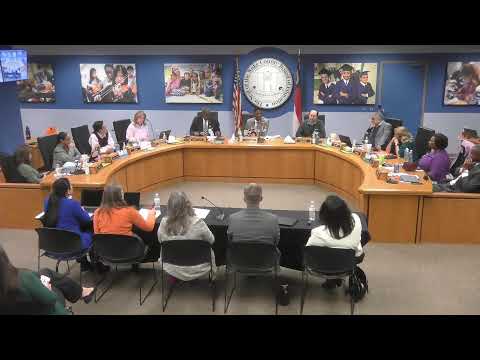
Wake County board holds emergency session as administrators explain $18 million special‑education carryover and proposed allotment changes
Loading...
Summary
Board members pressed Wake County administrators over confusing communications about an $18 million special‑education carryover adjustment and a plan to change special‑education allotments that staff say would reduce roughly 130 CCR teacher months; the superintendent and finance staff said the program will end the current year with a positive balance but needs adjustments to avoid a future deficit.
Chair Swanson opened a special call of the Wake County Board of Education to demand clarity about recent communications that suggested deep cuts to special education services, saying the meeting was “about getting answers” for families, teachers and staff. He told the public the board’s role is oversight and pressed administration for facts after a wave of email and public concern.
Superintendent Taylor and budget staff described the origin of the numbers that prompted alarm. Taylor said the district is not “firing 130 teachers” and that the oft‑quoted $18 million was miscommunicated: it represents carryover used this year and, if no program changes were made for 2026–27, staff project that continuing current spending and allotments could create a multi‑million dollar gap next year. “That is not for this year,” Taylor said, adding that the administration will present recommended adjustments in the superintendent’s proposed budget on April 7.
Senior budget staff gave the board a more technical account of federal IDEA (Individuals with Disabilities Education Act) grants, which allow districts to carry over funds for up to 27 months. Terri Kimsey, identified in the presentation as the senior director of budget, said a one‑time late allocation in 2021 substantially increased carryover levels and that recurring position additions to that temporary surplus depleted the buffer. Kimsey said the district will likely end the current fiscal year with roughly $3 million–$5 million in IDEA carryover — “so the program is not in a negative position” — but warned the carryover would be much smaller next year unless adjustments are made.
Finance staff and the superintendent laid out draft adjustments in broad terms: moving about 923 months (roughly 92 teacher positions) from federal grant funding to local funding and proposing allotment changes that staff estimate would reduce about 1,300 months (roughly 130 teacher months), with an estimated $17 million in budgetary effect (about $7 million shifted locally and $10 million reduced from federal allotments). Staff said those changes are intended to align recurring program costs with recurring revenue and to avoid exhausting the grant in the 2026–27 school year.
Board members repeatedly pressed staff on the timing and tone of communications to teachers and the public. Several members said staff notice about the changes and a teacher notification letter created alarm because they suggested job losses; administrators said part of the mailings were routine notices to employees on expiring contracts and part were transparent early notices that a recommended allotment change could reduce positions by a formula. Human resources staff told the board that renewable continuing contracts would be given placement priority within district vacancies; staff also said many of the positions proposed for reduction are currently vacant and that historical turnover is expected to absorb some of the proposed reductions.
Members of the board asked for more granular evidence: which positions were added to the grant, the dollar amounts spent on contracted services and speech/pathology increases, and whether other central‑office conversions or budget lines could be adjusted instead of recommending allotment changes that raise caseloads. Administrators agreed to provide more detailed documentation, including reconciled carryover numbers and a breakdown of the $7 million in services cited in the presentation.
The board and staff also discussed legal limits and compliance. Staff cited General Statute 143‑318.11(3) when proposing the closed session to consult the board attorney about privilege and process. The session ended with the board moving into closed session to consult counsel.
What happens next: staff said they will bring the superintendent’s proposed budget — including the adjustments discussed — to the board on April 7. Board members asked for additional options and clearer communications, and some requested a broader review of central‑office conversions, recruitment and retention incentives, and how vacant months and term contracts would be handled before any final personnel changes are implemented.