Get Full Government Meeting Transcripts, Videos, & Alerts Forever!
Get email alerts on the Sanitation Contracts topic
No spam. Unsubscribe anytime.
Staff recommends ACE Disposal for West Valley collection contract; staff warns of higher costs and possible fee increase
Summary
City staff recommended awarding a multi-year solid-waste contract to ACE Disposal after a two-bid RFP, described a recycling-processing cost-sharing term and price-escalation clauses, and said the change could add roughly $700,000 to hauling and disposal costs — potentially prompting a future sanitation-fee increase.
City public-works staff recommended ACE Disposal for the city's next multi-year solid-waste contract and outlined why the bid scored highest under the evaluation criteria and what the contract would mean for future costs.
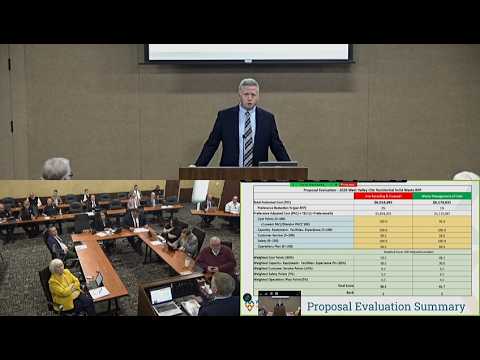
"At the end of the day, we, we recommend ACE," the presenter said after summarizing bid scoring that weighted price (50%), capacity/equipment/experience (30%), customer service (10%), safety (5%) and operations plan (5%). Staff said ACE won on price and also received evaluation preferences for being a local provider and for workforce/veteran programs.
Staff described contract terms offered in the winning proposal: a potential six-year agreement with two two-year extensions (up to a 10-year total), a disposal starting price of $33 per ton with a proposed 50-cent annual increase in early years, and CPI-like escalators tied to the U.S. Bureau of Labor Statistics index for collection services. Both bidders included a form of cost-sharing for recycling-processing when market prices rise; ACE proposed a specific cost-sharing approach and a proposed future-price escalator.
"It's more expensive than it was before, and roughly $700,000 more, between hauling and disposal," staff said, and then discussed the city's sanitation-fund balance and projections: an available cash reserve of roughly $1.5 million but a projected fiscal-year deficit of about $900,000 for FY 26/27 with the contract-increase impact included. Staff advised the council to consider timing for any sanitary-fee adjustment and suggested waiting until council has six months of experience under the new contract before setting new rates.
Why it matters: The recommended contract affects long-term service delivery and city finances. Staff flagged that the sanitation fund faces a projected deficit and that a fee increase will likely be needed to maintain operations if heightened costs persist. The cost-sharing mechanism for recycling-processing is intended to manage market volatility for recyclable commodities.
Next steps: Staff recommended the contract be brought forward for formal council action; council members asked clarifying questions about recycling processing fluctuations and the evaluation methodology.