Advocates seek $125,000 county support for Lehigh Valley passenger‑rail economic impact study
Loading...
Summary
All Aboard Lehigh Valley proposed a four‑month, $125,000 economic‑impact study to quantify benefits of restoring passenger rail between Allentown–Bethlehem–Easton and New York City and asked Northampton County to participate alongside regional partners; presenters said the study would produce a fall report and public engagement materials.
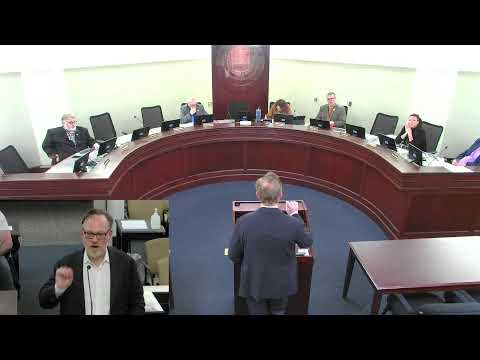
Brett Weber, principal of Brett Weber Architects and president of All Aboard Lehigh Valley, asked the Northampton County Economic Development Committee on April 2 to support a targeted economic‑impact study of passenger rail linking Allentown, Bethlehem and Easton to New York City.
Weber said his nonprofit — formed in February 2024 — and partner organizations want a quick, four‑month study to create a detailed data set that would strengthen the case for corridor identification and speed regional and state action. He told commissioners the study budget is "about a 125,000" and would produce a report and public‑facing engagement materials this fall. He named Rail Passengers Association and Econsult Solutions as technical partners and said Northampton County Community College, Lafayette College and Lehigh University have expressed interest in participating with data collection and analysis.
Weber framed the study as complementary to a broader passenger‑rail planning effort already underway and argued that a focused, region‑specific data set would make an “irrefutable” public case to PennDOT, state legislators and federal funders. He said the goal is to prioritize an Allentown–New York corridor as the most immediate economic opportunity and to marshal county and cross‑county support so PennDOT and Amtrak will treat the corridor as a priority for corridor identification.
Committee members asked whether Lehigh County had committed funds; Weber said outreach is ongoing and described the proposal as an insurance strategy to ensure the Lehigh Valley’s case is quantified. He also said engagement with state and federal legislators is part of the advocacy plan but that big funding commitments would follow a quantified scope of work.
The committee did not record a vote on the study request during this meeting.