Get Full Government Meeting Transcripts, Videos, & Alerts Forever!
Get email alerts on the County Budget topic
No spam. Unsubscribe anytime.
Madison County supervisors weigh absorbing health‑insurance increases, consider tax options to close budget gap
Summary
At a lengthy budget workshop, supervisors reviewed health-insurance renewal scenarios (county pickup estimated at $111k–$156k depending on school offsets), discussed keeping a 3% COLA, and preliminarily examined revenue options — including 1¢ real-estate, 10¢ personal-property, and lodging/meals tax shifts — to close a multimillion-dollar opening-balance gap.
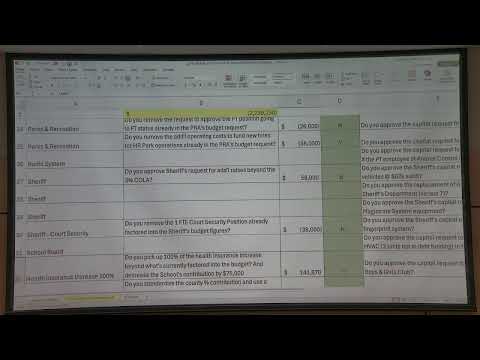
Madison County finance staff presented health-insurance renewal scenarios and the fiscal choices the board must make during the FY27 budget process. The county’s initial model showed a roughly $111,640 increase to the county budget under the recommended plan; after adjusting for four county employees reimbursed through school premiums and potential reductions tied to school-board decisions, staff reported a net county exposure in the $141,000–$156,000 range depending on assumptions.
"If we cover a 100%, of the increase and put ourselves in line with the schools, it would be these amounts for employees and for the county," staff said while presenting sample paycheck scenarios that included a 3% cost‑of‑living adjustment (COLA). In those examples, staff showed that lower‑paid employees’ net pay was minimally affected because the COLA offset higher premium shares.
The board debated whether to absorb 100% of the renewal cost or to seek alternatives: standardizing county contribution percentages, encouraging employee enrollment in higher‑deductible plans with HSA contributions, or exploring separate procurement from the school system’s pooled plan. Administration said it would ask the county’s broker to run hypothetical rates excluding the school pool and would meet with other brokers immediately to identify alternatives before open enrollment.
To close the preliminary budget gap staff identified several revenue options: each one‑cent increase in the real‑estate tax would raise about $275,000; a 10¢ move in the personal‑property tax (from $3.40 to $3.50) would yield approximately $175,000; lodging and meals tax increases were also discussed, though several supervisors expressed concern about passing higher hospitality taxes during a period of reduced tourism activity. The board briefly considered using a $150,000 school‑board reduction that the schools plan to reallocate to a strategic fund; supervisors discussed whether to accept a $75,000 share from that change to offset county health‑insurance costs.
Supervisors made two procedural budget choices that affect the gap: they signaled preliminary approval for a 3% COLA for county employees and directed staff to include a $1.41 million opening‑balance appropriation scenario in the draft budget for further review. Administration will produce a draft FY27 departmental budget for the board to consider next week, and staff will bring back targeted proposals on sheriff pay‑scale changes, health‑insurance procurement alternatives and capital scheduling to minimize single‑year spikes in required appropriations.
The board emphasized the need for more precise figures and options before settling on tax changes and asked administration to present comparative rates from neighboring counties and to re‑run health‑insurance models without the schools in the pool so the board can weigh employee impacts against taxpayer effects.