Get Full Government Meeting Transcripts, Videos, & Alerts Forever!
Get email alerts on the Memorial Design topic
No spam. Unsubscribe anytime.
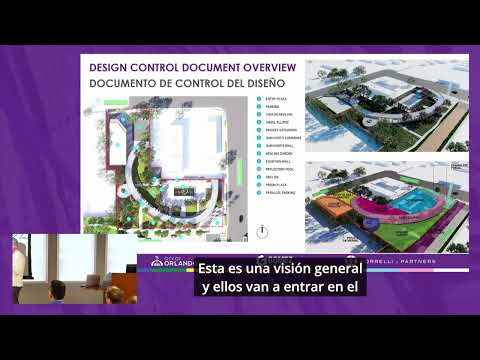
Orlando unveils 30% design for Pulse Memorial, plans to salvage elements of the nightclub
Summary
City staff and the memorial design team presented a 30% design package for the Pulse Memorial in Orlando, including a 3,500-square-foot visitor pavilion, an Angel Ellipse and plans to salvage parts of the Pulse building; 60% drawings and a public hearing are scheduled next.
Jorge Borrelli, design principal and president of Borrelli and Partners Architects, said the firm was honored to present the 30% design progress for the Pulse Memorial, emphasizing that the package is an early, conceptual set of images and that many materials and elements remain to be finalized.
The design team laid out the memorial’s major components and site orientation. The memorial sits west of Orange Avenue, with Kaley Street to the north and Esther Street to the south. Dan Michael Turbovich, senior architect and lead architect on the project, described a roughly 3,500-square-foot visitor pavilion that will combine exhibit space and gathering areas, support amenities and large glazing to link interior exhibits with exterior views: "It's a 3,500 square foot facility," he said.
Designers described the Angel Ellipse — a metal canopy and processional walkway ringed by tribute columns — and a reflecting pool/water wall that will display the names of the 49 people killed in the 2016 attack. Nico (Nico/Niko) Guillen, creative director with Local Projects, said the team plans names in multiple locations "for serving the purpose of collective memory" and that the water wall and the reflecting pool are intended to encourage slow, contemplative engagement.
The presentation said some original elements of the Pulse building are planned for reuse in the memorial. Dan Turbovich described a continuity approach: "We're gonna remove a section of the Pulse nightclub floor, And we're gonna actually place that directly in the position of that reflecting pool," and said the breach wall will be salvaged and placed at the foot of the obelisk. The team also said concrete from the original building is proposed for reuse in paving and other features.
Gomez Construction senior project manager Steve Caro provided near-term schedule details: "Next week, the sign will be removed. The week after that, the building will be removed." He said 60% drawings are due May 8 and will be followed by another public hearing; construction is anticipated to begin Sept. 26, 2026, with about a year of construction anticipated thereafter.
Why this matters: designers framed the project as an effort to balance technical feasibility and budget constraints with the committee's goals for honoring victims and creating spaces for reflection and healing. The team repeatedly emphasized that the package is 30% complete and that more design work — and public input — will follow.
The city will present 60% drawings at a public hearing after May 8; the team asked the public to reserve questions until the end of the meeting and invited attendees to provide feedback afterward.