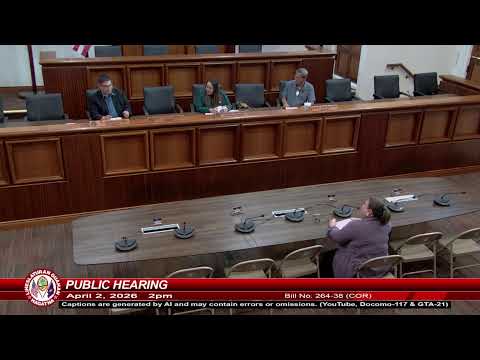
Senators hear plan to allow GCC to open career-and-technical charter school by raising charter cap
Loading...
Summary
A proposed amendment would raise Guam’s charter-school cap from seven to eight to allow Guam Community College to create a CTE-focused charter offering dual credit, industry credentials and a direct pipeline into local jobs; proponents argued it would leverage GCC facilities and existing programs, while senators pressed for details about statutory language, selection and funding.
Sen. Tina Rose Munoz Barnes introduced Bill No. 252‑38 COR to amend the charter‑school cap and authorize a career-and-technical education charter in partnership with Guam Community College (GCC). The measure would change the statutory cap from seven to eight, enabling GCC to pursue an eighth charter school focused on industry‑aligned training and early postsecondary opportunities.
The bill’s author said the aim is to create "a clear pathway for our youth to transition directly into the workforce with the ability to earn a good wage upon graduation," and noted GCC has previously hosted high‑school programs on its campus. Evangeline M. Cepeda, chair of the Guam Academy Charter Schools Council, testified the council supports expansion when new charters present “distinct, innovative, evidence‑based” missions and avoid duplicating services. "When a charter school shows that its concept is different from the seven existing charter schools, then...the council is in full support," Cepeda said.
GCC witnesses outlined the education and workforce case for the proposal. Virginia Tudela, interim GCC president, said aligning secondary CTE to GCC’s postsecondary programs would provide industry‑recognized credentials, dual credit and hands‑on competency training. Mary Okada, retired GCC president, described prior middle‑college work and said the model can allow students to graduate with certificates or associate degrees. Gina Ramos read written testimony from the GCC board emphasizing the college’s capacity and industry partnerships.
Committee members pressed for specifics on statutory scope and safeguards. Senators asked whether amending only the numeric cap would allow unrelated applicants to claim the new slot; Cepeda explained the charter council must hold a public hearing and evaluate mission fit under existing law. Senators also raised budget questions, noting a separate discussion has considered raising the per‑pupil allocation (currently discussed at $7,800) and whether the committee should increase the cap to a larger number (10 or 12) to avoid repeat legislation. Cepeda said the council would consult with existing charters and follow the 60‑day public process set under the law.
The chair closed public testimony on Bill 252‑38 COR and noted the committee would consider technical amendments in markup. The record shows broad support from GCC and the Charter Schools Council, with senators seeking further clarity on statutory language, mission categories and funding alignment before floor action.
Next step: The bill was publicly heard; committee markup was signaled as the forum for potential statutory edits and budget implications.