Get Full Government Meeting Transcripts, Videos, & Alerts Forever!
Get email alerts on the Education topic
No spam. Unsubscribe anytime.
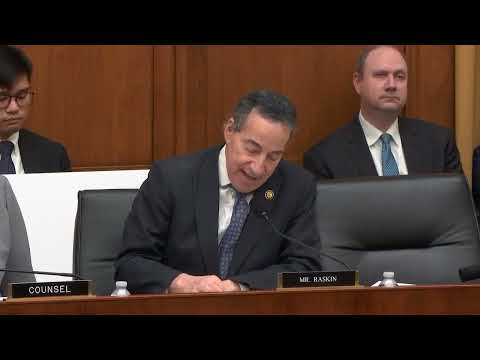
Committee member warns revisiting Plyler v. Doe would harm children’s education and health
Summary
At a House Judiciary Committee hearing, a committee member urged preservation of Plyler v. Doe and protections for children’s access to public education, citing research on attendance and academic impacts, public-health concerns and recent federal policy changes.
A member of the House Judiciary Committee warned colleagues that efforts to revisit the Supreme Court’s 1982 decision in Plyler v. Doe would strip thousands of children of access to public education and harm public health and the economy.
The committee member opened by invoking Tom Paine and Thomas Jefferson to frame public education as central to democratic self-government, then cited Plyler v. Doe and the Fourteenth Amendment’s equal-protection guarantee. "Plyler did not place an undue financial burden on America," the member said. "Children who are able to go to school, thanks to Plyler, have contributed to the tune of billions of dollars more in state and local income taxes than the cost of their education."
The lawmaker argued current immigration enforcement and related federal policies are already reducing school attendance and harming student performance. Citing a survey of 693 educators, the member said 24% reported reduced student attendance tied to enforcement activity, 18% reported declines in student performance, and 50% reported children expressing anxiety and fear. The member pointed to Willmar, Minnesota, as a local example where more than one in four students began missing classes after an ICE detainment and described a case in which a U.S. citizen student was stopped outside a district learning center.
The speaker summarized additional research from a large Florida urban school district saying enforcement surges were associated with reduced test scores among both U.S.-born and foreign-born Spanish-speaking students, particularly in higher-poverty areas. "It is hard to study, to learn, to think, to do homework, or to take exams when you are filled with fear and dread and anxiety," the committee member said.
The member also criticized recent federal actions affecting children’s health and economic supports, saying a recently enacted law included deep cuts to Medicaid, the Children’s Health Insurance Program (CHIP) and the Supplemental Nutrition Assistance Program (SNAP). The speaker warned that over 37,000,000 children rely on Medicaid and CHIP and nearly 15,000,000 rely on SNAP for health care and nutrition, and raised concern about rising measles cases and changes at the Department of Health and Human Services that the speaker said affected vaccine recommendations.
"This reign of terror is part of the administration's relentless campaign against children right now," the committee member said, urging peers to instead adopt policies such as making the child tax credit permanent, expanding health-care and nutrition access, and protecting the Department of Education’s role in ensuring equal access for nearly 26,000,000 low-income students and 7.5 million students with disabilities. The member closed by calling for action on gun-violence prevention as another leading cause of death for children.
The hearing record shows the remarks were delivered as part of the committee's opening statements; no formal motion or vote on these matters was recorded in the transcript.