Get Full Government Meeting Transcripts, Videos, & Alerts Forever!
Get email alerts on the Education Immigration topic
No spam. Unsubscribe anytime.
Committee member warns efforts to overturn Plyler v. Doe would bar undocumented children from K–12 schools
Summary
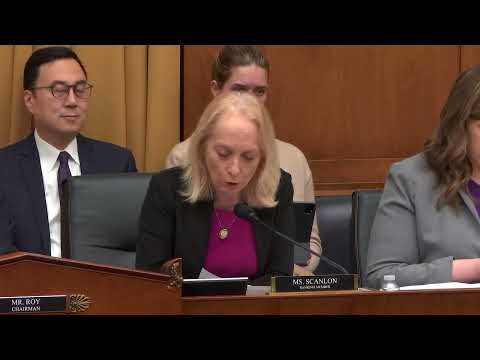
During a House Judiciary Committee hearing, a committee member warned that attempts tied to Project 2025 and some state bills to overturn Plyler v. Doe would deny undocumented children access to public K–12 education, and cited economic studies arguing immigration yields net fiscal and social benefits.
A committee member told the House Judiciary Committee that recent efforts to overturn the Supreme Court’s 1982 decision in Plyler v. Doe would strip undocumented children of access to public K–12 education and harm communities and the economy.
The member reviewed Plyler v. Doe, noting the Court rejected a Texas statute that sought to bar undocumented children from public schools and that the justices concluded excluding that group would be both unconstitutional and economically counterproductive. Quoting Chief Justice Warren Burger, the speaker said it is “senseless for an enlightened society to deprive any children including illegal aliens of an elementary education.”
The lawmaker said advocates tied to Project 2025 and several state initiatives are repeating arguments the Court rejected and urged the committee to view such proposals as a rollback of established constitutional protections. “Reversing Plyler versus Doe would mean that children as young as kindergarten and through high school would be denied a basic education,” the member said.
To support the economic argument, the speaker cited multiple studies and analyses, saying the Congressional Budget Office and other research find the net fiscal impact of immigration is positive. The member referenced a multi‑decade aggregate fiscal surplus attributed to immigrants’ tax contributions and noted a transcript figure describing a roughly $93 billion net benefit to Texas across the 40 years since Plyler. The member also cited a fwd.us analysis that, according to the remarks, credits Plyler beneficiaries with substantial lifetime tax contributions, reductions in child poverty and measurable GDP gains.
Beyond economics, the lawmaker argued providing public education to immigrant children yields social and developmental benefits, improves outcomes for U.S.-born classmates and strengthens the workforce. The member asserted Plyler beneficiaries have entered the workforce in large numbers and that denying education would have long‑term costs to public health, labor markets and community well‑being.
The speaker linked the effort to rescind or undercut Plyler to broader federal policy changes under the current administration, accusing congressional Republicans and the White House of pursuing cuts to programs such as Medicaid, CHIP and SNAP and of undermining education programs. The member also said Immigration and Customs Enforcement operations have targeted school communities, contributing to falling attendance and fear among students and families.
The remarks closed with a moral appeal against excluding children from school and a call to preserve the existing federal constitutional protection established in Plyler. The member yielded back at the end of the statement.
Next steps were not stated during these remarks; no formal motion or vote on legislation was recorded in the provided transcript.