Get Full Government Meeting Transcripts, Videos, & Alerts Forever!
Get email alerts on the Certificate Of Need topic
No spam. Unsubscribe anytime.
Committee defeats plan to remove personal care and IDD waiver services from certificate‑of‑need review after division vote
Summary
After extended debate and testimony from county aging directors, the committee voted 3–9 to defeat House Bill 5,096, which would have removed personal care and intellectual disability (IDD) waiver services from certificate‑of‑need review; proponents cited regulatory delay and legal costs, while opponents warned of revenue losses that support senior programs.
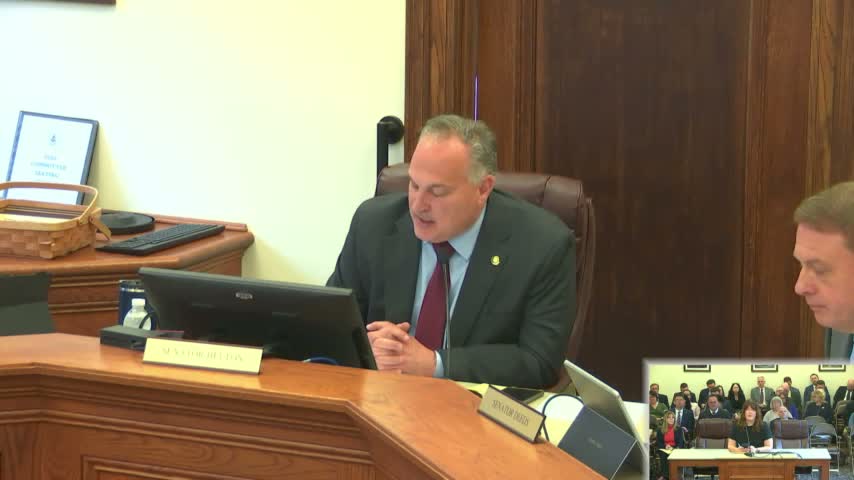
The Senate Health Committee on March 5 rejected House Bill 5,096 by division, with the chair announcing a 3–9 vote against reporting the measure favorably. Counsel described the measure as removing intellectual disability services and personal care services from certificate‑of‑need (CON) review regardless of capital cost and creating an exemption for those services; counsel’s summary included a $24,100 reduction in application fees to the health care authority as a fiscal effect.
The committee chair — who identified himself as operating an in‑home care services company and said he has no financial ownership — argued the bill would reduce regulatory burdens that had previously delayed providers for two and a half years and generated roughly $150,000 in legal fees in one appeal. He said removing the CON requirement would lower barriers for small providers trying to serve seniors at home. The chair also cited recent rate increases for in‑home workers (from $18.92 to $27 an hour) and noted a sizable statewide need for personal care services.
County aging executives testified that revenue from contracting under certificates of need helps fund meals and other senior services. Jenny Sutherland, executive director of the Putnam County Aging Program, told the committee that roughly half of her home‑delivered meal route is not covered by federal and state meal reimbursements; she said revenue from Medicaid personal‑care contracts and rented CONs helps fund underfunded senior programs. Sutherland provided concrete examples: meal reimbursement rates of $7 for congregate meals and $7.50 for delivered meals, and the inability to cover delivery costs on those revenues alone.
After debate and a motion to report the bill, members requested a division. The chair announced the tally as 3 in favor and 9 opposed; the motion failed and the bill was not reported out of committee.
Because the committee did not advance the bill, it will not proceed to the full Senate from this committee report.