Get Full Government Meeting Transcripts, Videos, & Alerts Forever!
Get email alerts on the Transmission Line topic
No spam. Unsubscribe anytime.
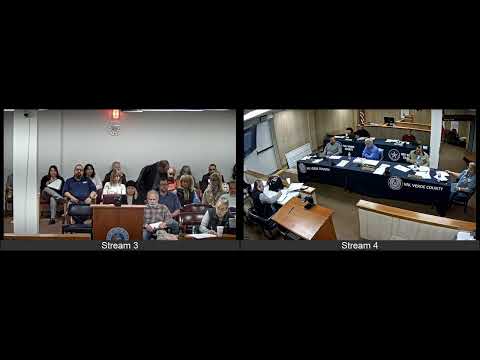
Val Verde commissioners unanimously oppose proposed AEP/City of San Antonio transmission route, seek intervener status
Summary
County residents and commissioners urged opposition to AEP/City of San Antonio transmission-line routings that would cross Val Verde County, citing landowner rights, environmental impacts and recreation loss; court voted 5–0 to oppose selected routes, propose alternatives and explore filing to intervene in the administrative proceeding.
Del Rio — Val Verde County Commissioners Court voted unanimously to oppose the current routings proposed by AEP Texas Inc. and the City of San Antonio for the Howard 2/Soltis single-circuit transmission line and to pursue formal participation in the utility’s administrative proceedings.
The court placed the application — described on the agenda as a joint request to amend certificates of convenience and necessity — on the docket after receiving public comments and a packet detailing proposed routes that would cross numerous counties, including Val Verde.
Why it matters: Commissioners and residents said the selected routes would threaten private-property rights, disrupt recreational lands around the Pecos and Devil’s rivers and reduce property values in rural parts of the county. The court directed staff to prepare a signed resolution and to explore applying to be an intervener so the county can be heard in the state administrative process.
During public comment, Byron Hodge, an attorney from the county, said he opposed the routing choices rather than the concept of a transmission line and urged the county to stay engaged. “This is a bifurcated process,” Hodge said, describing the administrative route-selection phase followed by separate condemnation actions for landowners. He urged routing along existing rights-of-way, saying, “why didn't they just go up to 77 and to I‑10 and make it real simple,” to avoid crossing pristine ranch and river lands.
Daryl Davis, who identified himself as a Val Verde County landowner, told the court the towers would be highly visible and cause harm to land value and recreation. “These electric towers would be a 160 feet tall, and it'd be a take a ride away of 200 feet wide,” he said, adding the county should continue opposing the plan.
The court discussed next steps including drafting a resolution, sending a letter within a week, hiring a state-level lobbyist and potentially filing to be an intervener in the administrative case so the county can participate in route selection. The judge said the county had previously sent a letter opposing the project and that the court would now prepare a resolution signed by members of the court.
Outcome and next steps: The motion — to oppose the selected routes, suggest alternate routing along existing rights-of-way, pursue intervener status, and prepare a resolution for the court to sign — passed 5–0. The court asked staff to issue the resolution or letter before the end of the next week and instructed commissioners to provide any names or additional material for the record. The court also discussed a possible deadline before April 1 for formal actions related to the routing process.
What wasn’t decided: The court did not adopt a specific legal strategy for condemnation proceedings and did not settle on formal litigation. Commissioners discussed, but did not yet finalize, hiring a lobbyist or the county’s precise filings with the state administrative process; those steps will return to the court for further action.
Who said it: Remarks and quotes in this story come from Byron Hodge and Daryl Davis (public commenters) and from court proceedings recorded by the county judge and commissioners during the open meeting.
The court placed the resolution and application materials on record and voted to return relevant paperwork to commissioners for signature and follow-up.