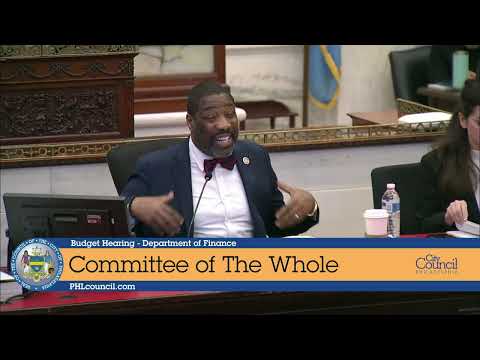
Revenue commissioner details property tax relief progress, compliance work and TAP enrollment
Loading...
Summary
Revenue Commissioner Kathleen McColgan told Council the combined property tax assistance application has processed more than 7,000 submissions, revenue’s compliance work recovered about $5.8 million from ineligible homestead claims, and TAP auto-enrollment reached just over 68,000 residents.
Revenue Commissioner Kathleen McColgan testified about the city’s efforts to streamline property-tax relief and improve collections. She said the combined real-estate/property tax assistance application launched last year and has produced more than 7,000 completed applications.
McColgan described active outreach—200–300 events per year in partnership with council and elected officials—and said the application walks applicants through multiple relief programs so they can apply for applicable benefits in one filing. She said, "We have had over 7,000 applications completed on there."
On enforcement and homestead compliance, McColgan said the department uses improved data and a compliance team to identify properties likely ineligible for homestead exemptions. She said the effort has billed or recovered more than $5.8 million, removed homestead status from over 5,500 properties, confirmed that about 3,500 properties were eligible, and that roughly 10,000 cases remain in process.
Council members raised concerns about long delays at the Office of Property Assessment (OPA) for lot consolidations and subdivisions, asking whether assessment lags cause the city to miss tax revenue when unimproved lots are later developed. McColgan said Revenue and OPA meet monthly, recertifications are backdated to the proper assessment date, and staff will examine specific examples brought by council members.
On water billing, council members reported residents receiving large, backdated water bills that can be unaffordable; McColgan said revenue and the Water Department share data and programs such as a "shared responsibility" policy that can waive 50% of usage past one year in some cases, and that customers can be converted to direct water customers and thus become eligible for TAP.
McColgan said the department does not support broad amnesty programs because prior analyses showed amnesty can reduce long-term collections, but pledged flexibility in individual payment agreements and additional briefings and data to council offices.