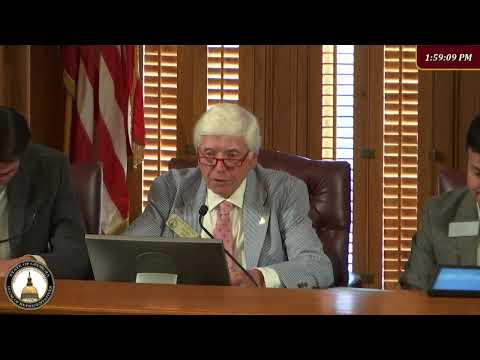
Rules Committee advances range of study resolutions and sets supplemental calendar
Loading...
Summary
The committee advanced multiple study and urging resolutions — on teacher pay steps, design-procurement, online gaming protections, special-needs services, the Georgia Capitol Museum oversight and others — and set a supplemental calendar listing numerous bills and resolutions for further consideration.
The House Rules Committee spent substantial portion of its session receiving requests for study committees and awareness resolutions and setting a supplemental calendar that will send multiple items for later consideration.
Members presented a series of study requests including: a study of step increases for veteran teachers (HR 1582); a study on alternative investment options for local government (HR 17 55); a study of design professionals' engagement for public funds (HR 17 48); a study of online gaming platforms with child-protection goals (HR 17 49); and a study of services for individuals with special needs and Medicaid paperwork burdens (HR 18 60). A separate request would study physician noncompete clauses (HR 592) as a potential recruitment and retention tool. Secretary Kelly requested HR 18 32 to clarify when a local charge is a fee versus a tax. Shelley Cooper asked about awareness-day procedures and requested recognition for a Prater Willis awareness day (HR 10 52).
Committee members also discussed an urging resolution (HR 19 48) to transfer supervision of the Georgia Capitol Museum from the University System Board of Regents to the building authority; the member who presented the request said both entities and the governor support that move and that future legislation may make it permanent.
Procedurally, the chairman set a supplemental calendar and the committee moved several items onto that calendar by voice, including the substitute to Senate Bill 214 (LC 47 4318 S), Senate Bills 527 and 565, a set of house resolutions including 16 70, 18 89 and 19 48, and Senate Resolution 624. Most items were moved, seconded and placed on the calendar with no recorded opposition noted in the transcript for those motions.
Why it matters: these study requests and calendar placements determine which issues will get committee time, staff study and potential legislation in future sessions. Several items — teacher pay, special-needs services, and the Capitol Museum oversight — have direct programmatic implications for state agencies and local communities.
Ending: the committee adjourned its scheduling work after setting the supplemental calendar; individual items will proceed through committee consideration according to the legislative calendar.