Advisory committee refines student‑survey policy draft, debates opt‑out timing and data protections
Loading...
Summary
North Kingstown’s advisory committee reviewed a revised student‑survey policy that separates PPRA‑covered surveys from other types, debated notification/opt‑out timelines (2 vs. 4 weeks), and asked staff to add clearer definitions and data‑protection language before sending the draft to the school committee.
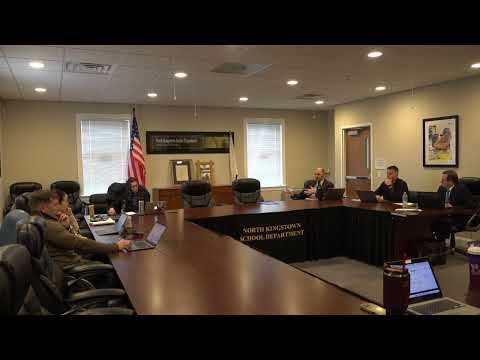
The Policy Advisory Committee met March 23 to review a rewritten student‑survey policy that distinguishes federally protected PPRA surveys from other questionnaires and clarifies when school approval and parent notification are required.
Committee Chair opened the discussion by pointing to redlined changes in the circulated draft and a new section that excludes ordinary instructional exit tickets from the formal approval process. Andrew Henney, the committee attorney, recommended adding an explicit opt‑out sentence for non‑PPRA surveys so parents have a clear option to exclude their children: "parents will be provided the opportunity to opt out of these surveys," he said.
Members spent significant time on the approval timeline. The draft requires non‑PPRA surveys to be submitted to a building principal at least two weeks before anticipated distribution; PPRA surveys carry a four‑week parental‑notification requirement. Several principals and administrators told the committee that "2 weeks is tight" for review and opt‑out communications, and recommended aligning the timelines to give families enough notice and administrators time to vet content.
The committee also debated which classroom practices should be excluded from the policy. Teachers and other members said exit tickets, bell‑ringers and in‑class assignments function as instructional assessments rather than district surveys and should not be delayed by the approval process. One teacher said these are "part of teaching and learning," and members proposed a clear label such as "non‑instructional surveys" or "administrative surveys" to separate those uses.
Privacy and platform security were recurring concerns. Members asked the administration to specify approved district platforms and to define the terms "anonymous" and "confidential" in the draft so teachers and students understand whether a response can be traced back to an individual. The draft already includes a data‑protection section, but members asked for more detail on how long survey results may be retained and what platforms are permitted.
On implementation, the committee favored a practical option discussed during the meeting: a one‑time opt‑out checkbox for non‑PPRA surveys at the start of the school year, while keeping PPRA surveys subject to per‑survey parental review under federal rules. Andrew Henney noted the legal distinction between PPRA and other surveys and recommended keeping the two questions separate when families complete annual permissions.
Chair concluded the discussion by asking staff to revise definitions, fold data‑protection language into the policy philosophy for emphasis, and return a new draft. The committee agreed to have the revised policy ready for the next advisory meeting; Jen (staff) will bring an updated draft to the April 13 meeting.
Action notes: the committee voted to approve the March 9 minutes earlier in the meeting and later moved, seconded and agreed to adjourn; detailed vote tallies were not specified in the meeting record.