Get Full Government Meeting Transcripts, Videos, & Alerts Forever!
Get email alerts on the Energy And Grants topic
No spam. Unsubscribe anytime.
East Stroudsburg district seeks $17.3 million in state grants to fund phased energy, HVAC and cabling projects
Summary
The district applied for six DCED grants covering about $17.3 million in projects; staff said grant awards would likely cover roughly 75%, leaving an estimated district share of about $4.5 million and a phased Trane energy plan that prioritizes lighting and controls first.
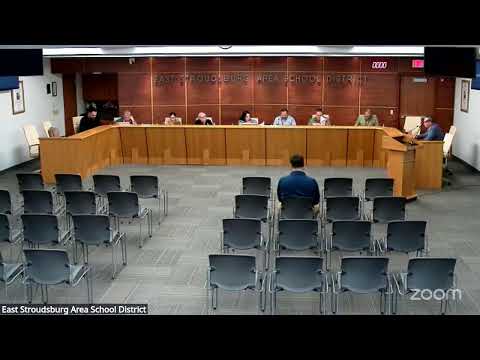
The East Stroudsburg Area School District on Monday told its Properties & Facilities Committee it submitted six DCED grant applications totaling about $17.3 million to fund a package of generator, roofing, HVAC and cabling projects across the district.
Superintendent (speaker 1) said the district expects the grants to cover roughly 75% of requested project costs, which “would be 4,500,000.0 as the district cost,” and cautioned that the district cannot start work until grants are awarded in October. “There are millions of dollars available at the state level, so we were able to put in…6 grants,” the superintendent said during the meeting.
The committee also heard a presentation from a Trane representative (speaker 7) on a three-phase energy retrofit plan intended to deliver near-term savings while phasing larger mechanical work over multiple years. Trane described phase 1 as lighting upgrades, updated controllers and retro‑commissioning — work that it said would produce immediate energy and operational savings. “It’s about a 50% reduction in the energy use when you go from T8 to LED,” the presenter said, explaining why lighting and controls are the highest-yield first-phase investments.
Phase 2 focuses on boilers and domestic hot-water systems, including a fuel-conversion project at the North/Lehman central plant to move away from No. 2 oil toward higher-efficiency fuel options. Trane estimated phase 2 costs at about $6.6 million, with some of that potentially covered by grant awards. Phase 3 would address classroom HVAC units and air handlers to improve air-quality and humidity control in aging units.
District staff said phase 1 would be the most likely to come from existing capital funds and noted a range of modeling assumptions Trane used, including a 4% loan rate for scenarios that include financing. The superintendent said the district currently has roughly $13 million in its capital fund; staff presented a scenario in which using $5.1 million of that fund would allow phase 1 to proceed without borrowing but would reduce reserves.
Committee members pressed Trane and district IT staff on cybersecurity for remote controls; IT representatives said control systems would be segmented on VLANs and isolated from general building networks, with additional protocols applied to protect access.
The committee voted to approve a DCED resolution to apply the submitted grant packages toward projects if awards are made and to advance a separate DCED cabling project for Bushkill, North, Lehman and Resica that would upgrade device-level cabling to modern standards.
Next steps: the district will await DCED award notices (expected in October), refine project start dates and cash‑flow modeling, and return to the board with contract and financing details before committing to construction.