Get Full Government Meeting Transcripts, Videos, & Alerts Forever!
Get email alerts on the Dredging Restoration topic
No spam. Unsubscribe anytime.
Torrington commission accepts phased dredging and restoration plan for 516 Mountain Road
Summary
The Inland Wetlands Commission accepted application WP26‑3 to allow targeted dredging and phased restoration of ponds at 516 Mountain Road, approving the application for processing while requiring erosion controls, dewatering plans and follow‑up permits for later restoration phases.
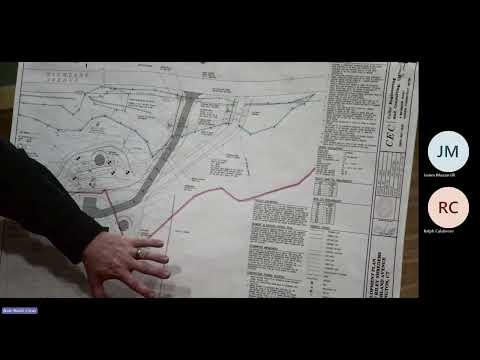
The City of Torrington Inland Wetlands Commission on March 17 accepted an application (WP26‑3) to allow a phased program of maintenance dredging and wetland restoration at 516 Mountain Road.
Clint Webb of C. Webb & Associates presented a three‑phase plan: phase 1 would remove accumulated sediments from targeted portions of the lower (west) and upper (east) ponds using dewatering basins and silt controls; phase 2 would remove phragmites and expand dredging where appropriate; phase 3 would focus on detailed restoration with herbaceous and shrub wetlands, stream‑course enhancements and planting. Webb said dewatering basins and separation of phragmites material from pure sediment would allow reuse of dredged sediment in later restoration phases.
Commissioners and staff discussed timing, erosion controls and wildlife protections. Webb noted the state Natural Diversity Database has identified the area as potential wood turtle travel corridor and said the work schedule can be staged to reduce overlap with sensitive periods. He estimated targeted dredge depths in some spots could increase from about 2–3 feet to as deep as roughly 6–9 feet in excavated holes intended for fish habitat; Webb also said modern excavators have depth markings to guide operators.
One commissioner recused themself from the application because they work in the office that handles related matters. Staff emphasized that phase 1 could proceed as a single permit with later permit modifications for phases 2 and 3; the commission accepted the application for processing and instructed staff to verify that required soil‑and‑erosion controls and dewatering measures are in place before significant excavations begin.
The acceptance vote allows the applicant to move forward with submitting the detailed crossing/profile and erosion control measures; phases 2 and 3 will require further review and potential public hearing determinations if material impact thresholds are met.
Next steps: staff to confirm E&S controls and silt fencing are installed as proposed and to report back at the April meeting; subsequent permit modification filings will include restoration plans.