Get Full Government Meeting Transcripts, Videos, & Alerts Forever!
Get email alerts on the Wetlands Crossing topic
No spam. Unsubscribe anytime.
Torrington wetlands hearing on Highland Avenue crossing continued after engineers and scientist detail impacts
Summary
The Inland Wetlands Commission continued the public hearing for Riley Shredders’ proposal at 1685 Highland Ave after the applicant presented a plan calling for two 15‑inch pipes under a driveway and about 2,000 sq ft of wetland fill; commissioners requested a crossing profile, pipe cover/detail and a construction-season condition.
The City of Torrington Inland Wetlands Commission on March 17 continued a public hearing on an application from Riley Shredders to build a single‑family home at 1685 Highland Avenue that requires a wetlands crossing for driveway access.
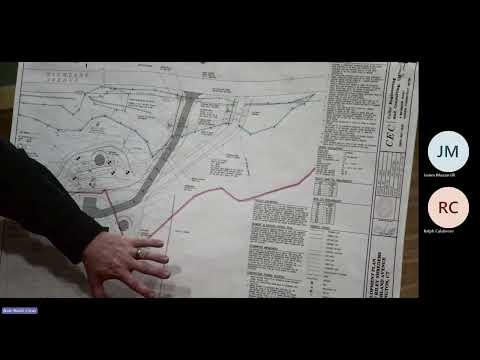
Bill Colby of Colby Engineering told the commission the 47‑acre parcel is best accessed by a driveway that crosses a roadside wetland band and that the proposal reduces wetland filling to “about 2,000 square feet” compared with larger impacts discussed previously. He said utilities would be run along the driveway to limit additional disturbance and that the house site is outside the 100‑foot regulated area. “I did reduce the wetland impact filling of the wetland by reducing the limits of clearing to about 2,000 square feet,” Colby said.
Ian Cole, the wetland scientist retained by the applicant, said the preferred crossing was chosen to minimize long‑term earthwork and instability that could result from cutting into the steeper knoll. He described the roadside wetland as a narrow band with stony ridge soils and said the proposed pipe sizing and design should maintain the existing groundwater conveyance. “From a functional standpoint…the way that this well and functions is the conveyance of groundwater flow and high seasonal flows. That’s going to be maintained by the pipe being sized appropriately by the engineer,” Cole said.
Commissioners and staff pressed the applicant for more technical detail. Staff requested a cross‑section showing the pipe profile, cover, headwall or grading detail and the amount of fill adjacent to each pipe. The commission also recommended a time‑of‑year construction window to reduce wet‑season impacts (staff proposed June–September for major construction work) and called for a construction sequencing plan that prevents heavy equipment from skidding through the stream or wet areas during site clearing.
Opposition from neighbors was not recorded at this meeting; commissioners who had viewed the site said they favored the proposed location for long‑term maintenance reasons but agreed the shorter, narrower crossing alternative raised valid wetland‑impact questions. The applicant agreed to provide the requested crossing profile and a construction sequence diagram. The commission voted to continue the public hearing to the April meeting to allow the submission and review of those details.
Next steps: the hearing remains open. The applicant will supply pipe cross sections, a construction sequencing plan and erosion‑control details prior to the April meeting.