Bill would expand jail safety standards, inspections and annual readiness checks
Loading...
Summary
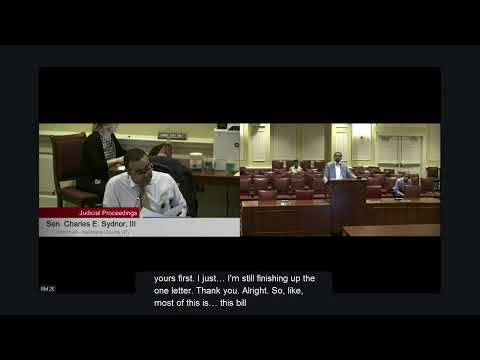
A bill to apply minimum health and safety standards, strengthen inspections and require annual readiness reports for all custodial facilities — including immigration detention centers — was heard April 1 before the Judicial Proceedings Committee. Sponsors say it aims to reduce breakdowns that create public emergencies and costs for hospitals and first responders.
A lawmaker told the Judicial Proceedings Committee that SB/HB 1018 would require uniform minimum health and safety standards across Maryland jails, strengthen inspection and reporting requirements, create an annual readiness checkpoint and give inspectors enforcement tools and facility access.
The sponsor said the measure is aimed at preventing ‘‘preventable facility failures’’ — whether caused by power loss, medical breakdowns or inadequate emergency plans — that can spill into surrounding communities and create costs for taxpayers, hospitals and first responders. The bill’s scope, the sponsor said, includes immigration detention facilities so all locked custodial operations in the state operate under the same baseline standards.
Committee members asked whether the Department of Corrections (DOC) currently enforces comparable standards and whether the agency supports the bill. The sponsor said staff had worked with DOC and that the agency had suggested late amendments intended to make implementation manageable and to avoid an additional fiscal note; DOC had taken no formal position in the bill file but had been consulted on amendments.
Senators pressed the sponsor about the bill’s fiscal note and how much additional general‑fund spending it might require. The sponsor said the agency believed the bill could be implemented with a small amount of additional staff or resources and that late amendments on the Senate side were intended to keep costs low; committee members said they wanted to see the proposed amendments and any agency estimates.
Several senators also raised constitutional and jurisdictional questions about regulating federal facilities. The sponsor cited recent federal court decisions (the transcript references Ninth Circuit guidance) and an attorney‑general letter and said the bill was drafted to be facially neutral — applying the same standards to state and federal facilities that are within Maryland’s legal authority to regulate — to reduce constitutional risk. He offered to share the AG letter and cited contrasting federal cases to explain which approaches are permissible.
The committee did not vote during the hearing. The sponsor said he would provide the committee with cross‑filed amendments and the attorney‑general letter for further review.