Get Full Government Meeting Transcripts, Videos, & Alerts Forever!
Get email alerts on the DEEP Testimony topic
No spam. Unsubscribe anytime.
DEEP outlines positions on solar soil tests, riparian buffers, wake‑surfing and other bills
Summary
Department of Energy and Environmental Protection deputies summarized agency testimony on nine bills affecting water quality, fisheries, boating and agency operations, urging collaboration with the committee while flagging implementation and fiscal concerns.
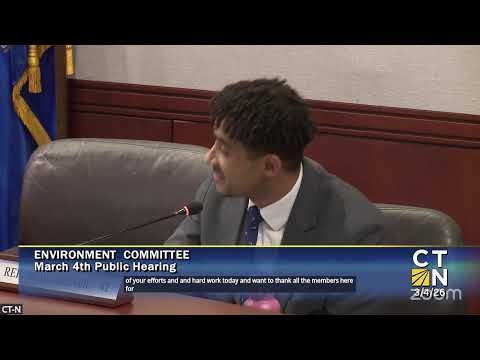
Emma Simino, deputy commissioner of DEEPEnvironmental Quality Branch, and Mason Trumbull, deputy commissioner for Environmental Conservation, opened the hearing with an overview of the agency's written testimony on nine bills. They said DEEP supports the science behind riparian vegetation but warned that the riparian bill (HB 5334) as drafted raises implementation and statutory‑scope questions. The agency expressed concern about SB 316, which would require regular soil testing at certain solar facilities, saying the proposal diverges from standard cleanup programs and that DEEP is unaware of evidence that contaminants are present at levels that would trigger remediation requirements.
On fisheries and boating, DEEP said it submitted neutral or clarifying testimony on several measures. Justin Davis, bureau chief for Natural Resources, told the committee that provisions in HB 5333 (striped bass and fisheries measures) could aid enforcement by banning certain harvest and restricting bait use during winter months, though the agency does not have strong evidence that the conservation benefit would be large. DEEP also noted that HB 5333 contains multiple fisheries elements (striped bass, lobster possession language, horseshoe crab provisions) that could have different economic impacts and deserve careful drafting.
DEEP emphasized the need for clear statutory language and practical implementation steps. Simino said the agency was happy to continue working with the committee to refine bills on crematory permits, park capacity, abandoned‑vessel authority and wake‑surfing/study recommendations. "Deep has filed written testimony on nine bills on the hearing agenda," Simino said, and asked lawmakers to consult the agency on details and enforcement issues.
The hearing that followed featured a range of local officials, commercial fishermen, environmental groups and industry representatives who urged either stronger protections or greater flexibility depending on the topic. DEEP repeatedly offered to follow up with technical edits and data to help the committee weigh tradeoffs.
What happens next: Committee staff and DEEP indicated they will exchange drafting suggestions; multiple legislators asked for follow‑up briefings or technical edits before markup.